

PRESS RELEASE
For many people, investing does not begin with choosing a share or fund. It begins with simple questions. How much money can I set aside? How much risk do I want to take? When will I need the money again? Wealthy customers can discuss these questions with a personal adviser. This support through private banking is usually available only to people with several hundred thousand euros to invest. Those starting with a smaller amount often have to work things out by themselves.
InvestSuite wants to give this group more guidance through Charlie for Advice. A bank can add the digital assistant to its investment app or website. Customers ask questions in everyday language. The software asks follow-up questions, collects the information it needs and explains the possible choices step by step.
Many people could benefit. A dashboard published by the Belgian regulator FSMA in September 2026 says that more than 510,000 Belgian individual investors traded shares, bonds or exchange-traded index funds in 2025. An index fund, often called an ETF, automatically tracks a group of investments. According to the FSMA, 96,000 Belgian individual investors traded ETFs for the first time in 2025 through a broker supervised by the regulator.
How Charlie works
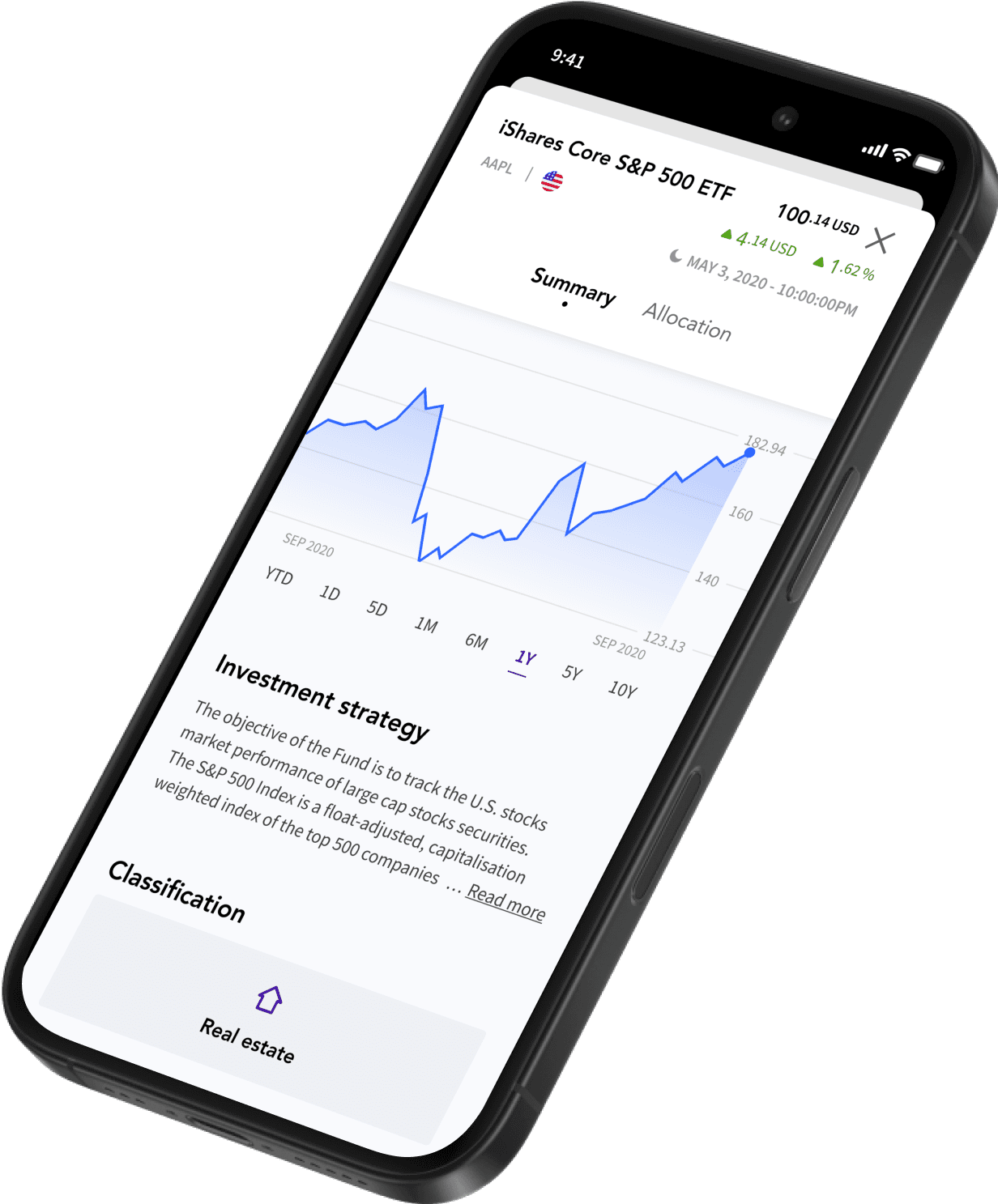
In the investment app, a customer might type: “I want to put money aside for later, but I do not know where to begin.” Charlie asks the right questions and uses the answers to prepare a personal proposal. Customers can express preferences, for example for a portfolio that could provide dividend income later. A simple chart shows three possible outcomes for the investments and income: pessimistic, realistic and optimistic. Charlie also remains available after the plan is created to answer questions, explain market movements and adjust the portfolio when it moves off course.
The bank remains responsible
The bank decides what information Charlie can use, what investments the software can suggest and what actions it can take. It also decides when a human adviser takes over the conversation. Charlie therefore works within the bank’s existing rules and controls.
This responsibility covers more than what Charlie may say or do. Customers must also be told clearly that they are talking to AI. The European transparency rules have required this since 2 August 2026. Before any investment advice is given, the bank must assess what the customer knows about investing, their financial situation, their goals and how much risk they can take. These requirements are set out in the European MiFID II rules. European regulator ESMA says that the same duty to protect the customer’s interests applies when AI performs part of the work.
When can customers use Charlie
InvestSuite is working with several large international banks on the first practical tests of Charlie for Advice. These tests show how the software fits into their investment app and advice process. InvestSuite hopes to launch Charlie with its first customers in 2027. The timing depends on integration, testing and approval by each bank.
“People who start investing often have very practical questions. Some do not know where to begin. Others have heard of ETFs but do not know which one suits them, what it costs or how to find the right product among the many unclear names. Charlie makes the search more concrete and guides the customer step by step towards a personal proposal.”
CEDRIC LARIDON | CEO OF INVESTSUITE
AVAILABLE TO BANKS TODAY | Aim: first customers in 2027.
About InvestSuite
InvestSuite is a technology company based in Leuven. It builds software that banks and wealth managers use to offer investment services under their own brand. investsuite.com.
Press contact
Cedric Laridon | CEO
cedric.laridon@investsuite.com | +32 477 59 65 07




COMMUNIQUÉ DE PRESSE
Pour beaucoup de personnes, investir ne commence pas par le choix d’une action ou d’un fonds, mais par des questions simples. Combien puis-je mettre de côté ? Quel risque suis-je prêt à prendre ? Quand aurai-je de nouveau besoin de cet argent ? Les clients fortunés peuvent discuter de ces questions avec un conseiller personnel. Ce service de banque privée n’est généralement accessible qu’à partir de plusieurs centaines de milliers d’euros à investir. Ceux qui commencent avec un montant plus faible doivent plus souvent se débrouiller seuls.
InvestSuite veut mieux accompagner ce groupe avec Charlie for Advice. Une banque peut ajouter l’assistant numérique à son application d’investissement ou à son site web. Les clients posent leurs questions en langage courant. Le logiciel demande des précisions, rassemble les informations nécessaires et explique les choix possibles étape par étape.
Le public concerné est large. Un tableau de bord publié par le régulateur belge FSMA en septembre 2026 indique qu’en 2025, plus de 510 000 investisseurs particuliers belges ont acheté ou vendu des actions, des obligations ou des fonds indiciels cotés. Un fonds indiciel, souvent appelé ETF, suit automatiquement un groupe d’investissements. Selon la FSMA, 96 000 investisseurs particuliers belges ont acheté ou vendu des ETF pour la première fois en 2025 par l’intermédiaire d’un courtier qu’elle contrôle.
Comment fonctionne Charlie
Dans l’application d’investissement, un client peut par exemple écrire : « Je veux mettre de l’argent de côté pour plus tard, mais je ne sais pas par où commencer. » Charlie pose les bonnes questions et utilise les réponses pour préparer une proposition personnalisée. Le client peut exprimer ses préférences, par exemple pour un portefeuille qui pourrait lui procurer plus tard un revenu grâce aux dividendes. Un graphique simple montre trois résultats possibles pour les investissements et le revenu : pessimiste, réaliste et optimiste. Même une fois le plan établi, Charlie reste disponible pour répondre aux questions, expliquer les mouvements des marchés et réajuster le portefeuille s’il s’écarte de l’objectif.
La banque reste responsable
La banque décide quelles informations Charlie peut utiliser, quels investissements le logiciel peut proposer et quelles actions il peut effectuer. Elle décide aussi quand un conseiller humain reprend la conversation. Charlie fonctionne donc dans le cadre de ses règles et contrôles existants.
Cette responsabilité ne se limite pas à ce que Charlie peut dire ou faire. Les clients doivent aussi voir clairement qu’ils parlent à une IA. Les règles européennes de transparence l’exigent depuis le 2 août 2026. Avant tout conseil en investissement, il faut aussi vérifier ce que le client connaît de l’investissement, sa situation financière, ses objectifs et le niveau de risque qu’il peut accepter. Ces obligations figurent dans les règles européennes MiFID II. Le régulateur européen ESMA précise que la banque doit continuer à agir dans l’intérêt du client quand une IA réalise une partie du travail.
Quand les clients pourront utiliser Charlie
InvestSuite travaille avec plusieurs grandes banques internationales sur les premiers tests pratiques de Charlie for Advice. Ces tests servent à vérifier comment le logiciel s’intègre à leur application d’investissement et à leur processus de conseil. InvestSuite espère lancer Charlie auprès de ses premiers clients en 2027. Le calendrier dépend de l’intégration, des tests et de l’autorisation de chaque banque.
“Les personnes qui commencent à investir ont souvent des questions très concrètes. Certaines ne savent pas par où commencer. D’autres ont déjà entendu parler des ETF, mais ne savent pas lequel leur convient, combien il coûte ou comment trouver le bon produit parmi des noms souvent peu clairs. Charlie rend cette recherche plus concrète et guide le client étape par étape vers une proposition personnalisée.”
CEDRIC LARIDON | CEO D’INVESTSUITE
DISPONIBLE DÈS AUJOURD’HUI POUR LES BANQUES | Objectif : premiers clients en 2027.
À propos d’InvestSuite
InvestSuite est une entreprise technologique basée à Louvain. Elle développe un logiciel qui permet aux banques et aux gestionnaires de patrimoine de proposer des services d’investissement sous leur propre marque. investsuite.com.
Contact presse
Cedric Laridon | CEO
cedric.laridon@investsuite.com | +32 477 59 65 07
PERSBERICHT
Voor veel mensen begint beleggen niet met de keuze van een aandeel of fonds, maar met eenvoudige vragen. Hoeveel geld kan ik missen? Hoeveel risico wil ik nemen? Wanneer heb ik het geld opnieuw nodig? Vermogende klanten kunnen zulke vragen bespreken met een persoonlijke adviseur. Die begeleiding via private banking is doorgaans pas beschikbaar vanaf enkele honderdduizenden euro’s. Wie met een kleiner bedrag begint, moet het vaker zelf uitzoeken.
InvestSuite wil die groep met Charlie for Advice meer begeleiding geven. Een bank kan de digitale assistent toevoegen aan de eigen beleggingsapp of website. Klanten stellen daar hun vragen in gewone taal. De software vraagt door, verzamelt de nodige informatie en legt de mogelijke keuzes stap voor stap uit.
De doelgroep is groot. Een in september 2026 gepubliceerd dashboard van de Belgische toezichthouder FSMA meldt dat in 2025 ruim 510.000 Belgische particuliere beleggers actief waren in aandelen, obligaties of beursgenoteerde indexfondsen. Zo’n indexfonds, vaak ETF genoemd, volgt automatisch een groep beleggingen. Volgens de FSMA handelden in 2025 96.000 Belgische particuliere beleggers voor het eerst in ETF’s via een broker onder haar toezicht.
Zo werkt Charlie
In de beleggingsapp kan een klant bijvoorbeeld typen: “Ik wil iets opbouwen voor later, maar ik weet niet waar ik moet beginnen.” Charlie stelt de juiste vragen en maakt op basis van de antwoorden een persoonlijk voorstel. De klant kan zelf voorkeuren meegeven, bijvoorbeeld voor een portefeuille die later dividendinkomen kan opleveren. Een eenvoudige grafiek toont drie mogelijke uitkomsten voor het vermogen en inkomen: pessimistisch, realistisch en optimistisch. Ook na het plan blijft Charlie beschikbaar om vragen te beantwoorden, uitleg te geven bij beursbewegingen en de portefeuille bij te sturen wanneer die van koers afwijkt.
De bank blijft verantwoordelijk
Welke informatie Charlie mag gebruiken, welke beleggingen de software mag voorstellen en welke acties mogelijk zijn, ligt volledig bij de bank. Zij beslist ook wanneer een menselijke adviseur het gesprek overneemt. Charlie werkt dus binnen haar bestaande regels en controles.
Die verantwoordelijkheid stopt niet bij wat Charlie mag zeggen of doen. Klanten moeten ook duidelijk kunnen zien dat ze met AI praten, zoals de Europese transparantieregels sinds 2 augustus 2026 voorschrijven. Voor elk beleggingsadvies moet bovendien worden nagegaan wat een klant van beleggen kent, hoe die er financieel voorstaat, waarvoor die wil beleggen en hoeveel risico die aankan. Dat is vastgelegd in de Europese MiFID II-regels. De Europese toezichthouder ESMA benadrukt dat die zorgplicht ook geldt wanneer AI een deel van het werk uitvoert.
Wanneer kunnen klanten Charlie gebruiken
InvestSuite werkt samen met enkele grote internationale banken aan de eerste praktijktests van Charlie for Advice. Zo wordt nagegaan hoe de software in hun beleggingsapp en adviesproces past. InvestSuite hoopt Charlie in 2027 voor het eerst bij klanten te lanceren. De timing hangt af van de integratie, tests en goedkeuring bij de bank.
“Wie begint met beleggen, zit vaak met heel concrete vragen. Sommigen weten niet waar te beginnen. Anderen hebben al van ETF’s gehoord, maar weten niet welke bij hen past, wat die kost of hoe ze het juiste product vinden tussen de vaak onduidelijke namen. Charlie maakt die zoektocht concreet en begeleidt de klant stap voor stap naar een persoonlijk voorstel.”
CEDRIC LARIDON | CEO VAN INVESTSUITE
Over InvestSuite
InvestSuite is een Leuvens technologiebedrijf dat software maakt waarmee banken en vermogensbeheerders beleggingsdiensten onder hun eigen merk aanbieden. investsuite.com.
Perscontact
Cedric Laridon | CEO
cedric.laridon@investsuite.com | +32 477 59 65 07

Summary
Automated portfolio management does not have one fixed effect on client trust in banks. It can erode it or strengthen it, depending on how the automation is presented. Wealth managers are growing more confident in automated and AI-assisted investing while their clients grow less trusting of it: two in five UK wealth managers now believe clients will never trust AI-driven investment decisions, up from one in four two years ago. Banks that keep client trust are using automation to make that relationship more transparent, rather than choosing between automation and the human relationship.
A look at the latest data on automated portfolio management
Automated, algorithm-driven portfolio management has moved from a niche offering to a mainstream expectation inside financial institutions. Avaloq's 2026 research found that 85% of wealth managers globally believe AI will be integral to their work, and 81% believe it will benefit the industry as a whole.
Client sentiment is moving in the opposite direction. The same research found that 40% of UK wealth managers now believe their clients will never trust AI in investment decisions — up sharply from 24% in 2024 — with a comparable rise globally (30%, up from 25%). Academic research points to why this matters for banks specifically: a study of robo-advisory adoption by Bruckes and colleagues found that a client's existing trust in their bank does transfer to a new automated investment service, but only when the platform doesn't appear to strip away the safeguards clients associate with a regulated institution.
Why the Trust Gap Exists (It Is Not a Technology Problem)
The trust gap rarely comes from the mathematics behind an automated portfolio. It comes from how automation is communicated. A widely cited study by SEI and Scorpio Partnership found a striking split: 100% of private clients said the wealth management industry was not transparent, while 100% of the wealth managers serving them said it was. Clients weren't asking for less automation, instead demanding a clear account of how and why decisions in their portfolio were made, and how those decisions connected to their own goals.
More recent research confirms the pattern holds. A 2026 TransUnion survey found that transparency in fees and advice (56%) and brand credibility (56%) are now the leading drivers of trustworthiness for investors, on par with concern about fraud and data security (56%). Performance alone no longer earns trust on its own. Clients trust what they can see and understand.
What Builds Trust in Automated Portfolios vs What Erodes It
Erodes Client Trust | Builds Client Trust |
Opaque, "black box" allocation decisions clients can't trace | Deterministic, explainable optimization logic an advisor can walk through |
Static, delayed statements arriving after the fact | Continuous, plain-language reporting available on demand |
Automation framed as replacing the advisor relationship | Automation framed as extending the advisor's capacity to serve clients |
A generic, one-size-fits-all robo journey | A hybrid journey with a clear path back to a human advisor |
How InvestSuite Approaches Automated Portfolio Management
InvestSuite's Robo Advisor runs on deterministic mathematical optimization rather than opaque, non-deterministic models, so every allocation decision has a repeatable, explainable basis a bank can walk a client through. Our Portfolio Optimizer measures risk through iVaR, a proprietary metric built around how investors actually experience risk: the frequency, magnitude, and duration of losses, not just volatility on a chart.
Automation alone doesn't guarantee transparency, however good reporting does. StoryTeller turns portfolio activity into a continuous, plain-language narrative for the client rather than a quarterly document that arrives after the fact. Paired with a hybrid workflow, automated portfolio construction with a human advisor positioned to explain, adjust, and intervene, banks can offer the efficiency of automation without asking clients to give up the relationship that earned their trust in the first place.
What Are The Banks That Stay Ahead Doing
The institutions pulling ahead aren't trying to make automation invisible. They're making it visible on the client's terms: real-time portals instead of static statements, advisors positioned as the ones interpreting the automation rather than competing with it, and reporting that explains the "why" behind a portfolio change the moment it happens. That shift, more than any feature of the underlying technology, is what determines whether clients experience automated portfolio management as something done for them or something done to them.
Automated portfolio management isn't the threat to client trust that early skepticism suggested, nor is it a win just because the technology works well. Trust is built in the space between a decision and its explanation. Banks that close that gap keep client trust. The ones that don't are the ones showing up in next year's trust surveys.

Summary: Automated investment reporting is hard to scale because the underlying data is fragmented across custodians, personalization requirements multiply with every new client segment, and regulatory formats shift by jurisdiction and mandate type. Reporting engines built for one custodian, one regulator, or one report template break the moment a wealth manager tries to serve more clients across more relationships.
A wealth manager can build a beautiful client report once. Building the same quality of report, correctly, for ten thousand clients holding assets across a dozen custodians, three jurisdictions, and both advisory and self-directed mandates is a different problem entirely. Most firms discover this the hard way: reporting projects that work well in a pilot start breaking down as soon as volume, account complexity, or client segments increase. So how can they scale investment reporting without losing control? This article takes a look at the core of the issue, explains how it can be solved, and suggests actual solutions.
What Makes Automated Investment Reporting Hard to Scale?
Three structural issues repeat across the industry, regardless of firm size:
Fragmented, inconsistent source data. Client assets rarely sit with one custodian anymore.
Personalization that resists templating. Every client segment expects a report that feels built for them, not a shared PDF with their name on it.
Regulatory requirements that vary by market and mandate. A report acceptable under one regime is not automatically compliant under another.
Each of these compounds the others. Fixing data quality does not solve personalization, and solving personalization does not solve compliance. A reporting system has to hold all three at once, at volume.
Why Does Fragmented Custodian Data Break Automated Reporting?
Nearly a third of registered investment advisor firms now work with two or more custodians to support client choice and diversify relationships, according to a WealthManagement.com report cited by Terrapin Technologies, and each custodian tends to deliver files in a different format, on a different schedule, with a different level of completeness. When those files feed into a single client report, small formatting mismatches turn into reconciliation errors, and reconciliation errors turn into a compliance question the next time a client asks why two numbers do not match.
Flanks, a wealth data infrastructure provider, points to the same root cause: client portfolios are rarely held with a single institution, so every custodian, bank, or private market investment a client uses adds another data format to reconcile. Automated reporting cannot scale on top of that fragmentation. It first needs a layer that standardizes, reconciles, and validates the data before a single report is generated.
Why Is Personalization Difficult to Automate at Scale?
Clients increasingly expect the same tailored, real-time experience from their wealth manager that they get from any other digital service. Serving that expectation for a handful of high-touch clients is straightforward. Serving it for tens of thousands of accounts, each with a different mandate, risk profile, and reporting cadence, requires the reporting engine to generate genuinely different narratives and visualizations, not just swap a logo and a name into a fixed template.
Most legacy reporting stacks were not built for that. They were built to produce one report format well, and every additional variation was handled with manual overrides. Manual overrides do not scale; they multiply operational risk with every new client segment added.
How Do Regulatory Requirements Complicate Reporting Automation?
Compliance costs in wealth and asset management tend to rise in step with the business itself, and EY points out that relying on outdated tools to monitor today's portfolios is costly, slow, and often ineffective, as investor demand for customized investment management agreements and more complex vehicle types keeps growing.
Separately, industry research from Funds Europe found that 61% of leaders report that responding to regulatory or market-driven change still requires considerable resources, even with automation in place. A reporting system built for MiFID disclosure requirements in one market will not automatically satisfy a different regulator's expectations elsewhere, and a system that ignores the distinction between advisory, discretionary, and self-directed mandates will misreport what each client actually needs to see.
How InvestSuite Helps Wealth Managers Bypass These Bottlenecks
InvestSuite's StoryTeller was built to scale while serving clients in a hyper-personalized way. Instead of treating reporting as a static document generation step at the end of the pipeline, StoryTeller connects directly to the same portfolio construction and risk data that drives the rest of an institution's platform, so reports are generated from a single, reconciled source rather than stitched together after the fact.
Because InvestSuite is broker and custodian agnostic, financial institutions are not locked into a single data source to begin with. That removes a large share of the fragmentation problem before reporting even starts.
The result is a reporting layer that scales the way the rest of a digital wealth platform should: personalized to the client, consistent across custodians, and structured to fit the regulatory context of each market InvestSuite's clients operate in.
Traditional Reporting vs. an Automated and Scalable Approach
Challenge | Traditional Approach | Scalable Approach (InvestSuite) |
Multi-custodian data | Manual reconciliation per custodian, per report cycle | Broker/custodian-agnostic architecture with a single reconciled data source |
Personalization | Fixed templates with manual overrides for exceptions | Reports generated from live portfolio and risk data per client |
Risk communication | Inconsistent risk language across mandate types | iVaR provides one explainable, deterministic risk metric across segments |
Regulatory fit | Rebuilt or patched per market and mandate | Configurable reporting structured for advisory, discretionary, and self-directed mandates |
Looking into scaling automated investment reporting?
Reporting is often treated as the last step in a digital wealth platform, but it is usually the first place scale problems become visible to clients. Financial institutions that fix the data foundation and personalization architecture before volume forces the issue are the ones able to grow their client base without growing their reporting headcount at the same rate.
If your company is looking into implementing technologies that would allow you to rapidly scale automated investment reporting, InvestSuite is the place to be. Take a look at StoryTeller, check out the reports it can generate in a matter of minutes, and, if you like it, reach out! We would be happy to go into more detail.

On August 14, 2026, Securityplus Federal Credit Union launched Securityplus Investments, a self-directed investing platform built into its digital banking app and powered by Eko Investments. It joins a wave of banks and credit unions racing into self-directed investing as the global market for it approaches $109 billion in 2026. But launching a self-directed platform and scaling one profitably are two different problems. Most institutions solve the first and stall on the second, because the real constraint on how banks scale self-directed investing platforms is not the technology stack. It is what happens the moment a client's portfolio drops and they have no advisor to call. This article examines why that support gap widens as self-directed platforms grow, what it costs banks that ignore it, and how forward-thinking institutions are closing it.
Why Scaling Self-Directed Investing Is Harder Than Launching It
Self-directed investing platform: A digital brokerage account where the client researches, selects, and executes their own trades, with the bank providing infrastructure and information but not personalized investment advice.
Securityplus is one of dozens of banks and credit unions launching self-directed investing this year, alongside institutions like U.S. Bancorp Advisors and fintech entrants such as Betterment expanding into the category. The rush makes sense: the global self-directed investors market is estimated at roughly $108.8 billion in 2026, and nearly 71% of retail investors now manage at least part of their portfolio independently through online platforms. For banks, the strategic logic is defensive as much as offensive. FNZ research notes the U.S. banking sector has consolidated from more than 14,000 institutions to fewer than 4,000, leaving regional banks and credit unions competing for the same self-directed clients as megabanks and fintechs, without megabank engineering budgets.
Launching the platform, however, is the easy half of the problem. Every institution above can stand up a branded self-directed app in months using white-label infrastructure. Few have solved what happens to their support organization once tens of thousands of self-directed clients are active at once.
What the Scaling Bottleneck Actually Costs Banks and Wealth Managers
Self-directed does not mean self-sufficient. Cerulli Associates research finds 55% of self-directed investors say it is important or somewhat important to be able to talk to a human specialist linked to their account, and 42% say they would pay for that access, yet just 39% have ever actually used it. That gap between demand and usage is not a sign self-directed investors do not need help. It is a sign the help is too hard to reach.
55% of self-directed investors want human specialist access. 42% would pay for it. Only 39% have ever used it. — Cerulli Associates, 2026
Every new self-directed client who wants that access adds a support ticket, and support tickets do not scale like software does. Industry benchmarking on customer support costs puts self-service resolutions around $15 per ticket versus roughly $45 for an agent-handled interaction, a gap that compounds quickly across a growing self-directed base, especially in a regulated context where agents must be trained on suitability and disclosure rules. Complaint patterns across several bank-operated self-directed platforms, tracked by review sites like NerdWallet and BrokerChooser, consistently cite slow support response times and account-handling frustration as top pain points. The pattern is structural: a bank can add self-directed accounts faster than it can add compliant, portfolio-literate support staff to answer questions about them.
How Forward-Thinking Banks Are Closing the Scaling Gap
White-label infrastructure like the one accessible through Self Investor solves the first half of the scaling problem: banks no longer need 18 to 24 months and a large internal engineering team to launch a branded self-directed experience, and can extend into goal-based investing through Robo Advisor for clients who want more structure without full advisory. But infrastructure alone does not answer the "who do I call" question that drives the support gap above.
That is the specific problem is built to close. Charlie sits on top of a bank's self-directed platform and answers the questions that would otherwise become support tickets, such as why a portfolio moved, what a position is worth, or how concentrated a client's holdings are, using figures calculated deterministically from that client's actual portfolio rather than estimated by a model. It does not provide investment advice; it provides the same clarity a human specialist would, without every new client adding headcount to a support queue. For a bank trying to scale self-directed investing without scaling its support costs in lockstep, that is the gap Charlie is designed to close.
Scaling Self-Directed Investing Is a Support Problem Before It Is a Technology Problem
Securityplus's launch is one data point in a much larger rush of banks and credit unions into self-directed investing, and most of them will clear the technology hurdle without much trouble. The ones that struggle to scale will be the ones that treated the support gap as an afterthought rather than the actual constraint. Closing that gap, not just shipping the app, is what determines whether self-directed clients stay long enough to become profitable ones.
If you are evaluating how to scale self-directed investing without scaling support costs at the same rate, reach out! We would be glad to talk through what InvestSuite's investing solutions and Charlie can do for your team.

On August 14, 2026, DriveWealth announced it is powering IOL Privé, a new digital-first private banking platform from IOL Group, a Latin American brokerage with more than two million customers and 25 years in the market. The launch gives affluent investors advisory, international market access, and wealth planning through a single app, replacing what DriveWealth CEO Naureen Hassan called the "complex onboarding processes and disconnected technology channels" that have historically defined private banking. The timing is not coincidental. Cornerstone Advisors research finds more than $2 trillion has already moved out of banks and credit unions into fintech investing platforms, and fintechs captured 56% of new checking account openings in 2025, up from 49% the year before. This article examines why goal-based robo advisory has become a retention strategy for banks and neobanks, not just a private-banking upgrade, what the shift means for institutions competing for the same deposits, and how forward-thinking firms are embedding the capability rather than building it from scratch.
Why Banks and Neobanks Are Embedding Goal-Based Robo Advisory Now
Goal-based robo advisory is spreading among banks and neobanks because investing has become the first product customers take elsewhere when their primary bank does not offer it. IOL Privé, powered by DriveWealth's embedded brokerage infrastructure, packages dedicated wealth advisory, international investment access, and fully disclosed U.S. accounts into one digital experience for IOL Group's affluent clients. "Through our partnership with IOL Privé, we're helping modernize private banking by providing the infrastructure to deliver seamless investment experiences in a digital platform clients already know and trust," said Hassan in the announcement. IOL CEO Diego Pizzulli framed it as a 25-year-old institution's answer to a newer generation of client expectations.
Goal-based investing: An investment approach that measures success by how well a portfolio tracks against a client's specific stated objective, such as retirement income or a home purchase, rather than by performance against a market benchmark.
The pressure behind moves like this is structural, not cosmetic. Cornerstone Advisors research found Americans rate their primary checking account a lukewarm 7.8 out of 10, and more than a third of Gen Z and 40% of millennials say they would be "very likely" to open a new account elsewhere if they could invest directly from it. Consumers, the research notes, are unbundling their financial lives and assembling best-in-class products across providers and investing is one of the first things they take elsewhere.
What Deposit Displacement Means for Banks, Private Banks, and Neobanks
Banks and neobanks face a version of this pressure that compounds with each generation of new customer. A Cornerstone Advisors and InvestiFi report found that 66% of zillennial investors have already reduced their deposit balances in favor of investing activity on fintech platforms, framing the gap as a product shortcoming rather than a marketing one. The same report found fintechs' share of new checking account openings climbed from 49% in 2024 to 56% in 2025, meaning banks and neobanks are now losing the primary banking relationship itself, not just a secondary investing account, before it is ever established.
More than $2 trillion has moved from banks and credit unions into fintech investing platforms, and fintechs now capture 56% of new checking account openings, up from 49% just one year earlier.
For neobanks, the exposure is sharper still: a customer's first banking relationship increasingly is a fintech app, and the CFA Institute's Next-Gen Investors report found Gen Z investors are more likely than older generations to receive financial guidance through workplace plans or robo-advisors in the first place. A bank or neobank without a credible goal-based investing experience is not just missing a fee opportunity; it is ceding the primary relationship to whichever app got there first.
How Banks Can Implement Goal-Based Investing Without Starting From Scratch
The banks and neobanks closing this gap are not all building brokerage and advisory infrastructure in-house. IOL Group's own launch depended on DriveWealth's embedded infrastructure rather than an internal build, and that pattern holds across the sector: the Research and Markets Robo Advisory Market Report 2026 puts the global robo advisory market at $18.7 billion in 2026, up from $14.25 billion in 2025, growth increasingly captured by institutions embedding a proven platform rather than building one from scratch.
This is the gap InvestSuite's Robo Advisor is built to close for banks, private banks, and neobanks. It is configurable under an institution's own brand, with goal tracking, risk-based glide paths, and rebalancing logic already engineered to work together, rather than requiring separate procurement for each piece.
The Banks That Embed Goal-Based Robo Advisory Now Will Keep the Next Generation of Customers
IOL Privé is one institution's answer to a pressure every bank and neobank now shares: investing is the product customers reach for first when deciding whether their primary bank still fits their life, and Cornerstone's data shows that decision is already going against traditional institutions. The banks and neobanks that embed a credible, goal-based investing experience now, rather than after their most valuable customers have already unbundled their finances elsewhere, will be the ones still holding those relationships as the next generation of depositors comes of age. The firms that move now will define the next decade of wealth management.
If you are evaluating how to bring goal-based robo advisory into your own bank or neobank app, reach out! We would be glad to talk through what Robo Advisor can do for your team.

In the last week of July 2026, retail investors did something they had not done in nearly three years: they became sustained net sellers of individual stocks, dumping shares tied to the AI and semiconductor trade at a pace Citadel Securities called the largest week of retail equity selling since 2022. Technology-sector retail selling that week exceeded any single week in Citadel's dataset since January 2019 by more than 80%, as the Philadelphia Semiconductor Index fell 28.6% from its June peak. For self-directed investing platforms, the episode is less a market story than a client-behavior stress test: the same investors who told eToro's Q3 2026 survey they intend to buy the dip instead sold into it. This article examines what triggered the sell-off, what it reveals about the gap between stated intentions and actual self-directed investor behavior, and how platforms are building guardrails to close it.
What Triggered Retail's Biggest Sell-Off Since 2022
Retail investors turned into aggressive, sustained net sellers of individual stocks in the final week of July 2026, driven by a sharp reversal in the year's most crowded trade: artificial intelligence and semiconductors. According to Citadel Securities' "August — After the Reset" report, the period marked four consecutive sessions of net retail outflows which was the longest selling streak of the year, with average daily net notional running nearly twice as large as the last comparable episode, in November 2025.
Panic selling - The tendency of investors to sell assets rapidly during a market downturn out of fear of further losses, often near the point of maximum loss, driven by loss aversion rather than any change in underlying fundamentals.
The selling was most pronounced in technology, where retail investors sold more notional in that single week than in any other week in Citadel's dataset going back to January 2019, exceeding the previous record by more than 80%. One record-setting session was concentrated almost entirely in four memory-chip names, more precisely Micron, SanDisk, Seagate, and Western Digital, which together accounted for 88% of that day's net retail selling, according to Bloomberg's reporting on JPMorgan trading data . The backdrop: the Philadelphia Semiconductor Index fell 28.6% from its June 22 peak during what strategists dubbed the July AI-infrastructure rout, dragging the Nasdaq-100 toward correction territory. Leveraged ETFs amplified the move mechanically, rebalancing daily to hold their exposure targets; assets in leveraged products fell from a record of roughly $218 billion to about $198 billion as the sell-off hit.
What This Means for Wealth Managers, RIAs, and Self-Directed Platforms
The sell-off exposes a widening gap between what self-directed investors say they will do in a downturn and what they actually do when one arrives. eToro's Q3 2026 Retail Investor Beat survey found only 8% of respondents feel as confident as possible investing in stocks, while 26% now say they would buy after just a 5–10% decline, up from 22% a year earlier — a stated intention to buy dips earlier than before.
Only 8% of US retail investors say they feel as confident as possible when investing in stocks, even as 26% say they'd buy after just a 5–10% market decline. - eToro
Yet when the sharpest real drawdown of the year arrived in chip stocks, the same cohort sold rather than bought, representing the first sustained stretch of individual-stock selling by retail investors in nearly three years, per Bloomberg. Behavioral finance has a name for this gap: loss aversion, a well-documented driver of impulsive, fear-based decisions during market upheaval that overrides whatever plan an investor stated in advance. We have talked about it extensively in our Debiasing in real time whitepaper where together with University of Leuven we experiment on how we can mitigate these biases.
As you will see in the whitepaper, for firms serving self-directed and semi-advised clients, this is as much a platform-design problem as a market one. A self-directed investor selling at the bottom has no advisor on the phone to talk them out of it, which means the platform itself is the only thing standing between a stated long-term plan and a fear-driven trade, and platforms without behavioral guardrails or timely context risk client attrition and reputational damage exactly when volatility, and client anxiety, are highest.
How Platforms Are Building Behavior Into the Product
The platforms responding well to episodes like July's are not trying to predict the next sell-off; they are building tools that intervene in the moment an investor is most likely to act on fear rather than plan. That means surfacing portfolio concentration risk before a trade is placed, giving plain-language context on why a stock is moving, and putting a client's own historical goals back in front of them at the exact point they are about to abandon those goals.
This is the mission InvestSuite's Self Investor is built to accomplish. Alongside stock screening, fractional shares, and portfolio health checks, it is designed to surface concentration and volatility context at the moment a client is weighing a trade, rather than after the fact. For banks and brokerages offering white-label self-directed access, that behavioral layer sits alongside the onboarding and compliance infrastructure already built into the platform, rather than requiring a separate build. For institutions watching July's record sell-off, the priority should be to have a platform that helps clients respond to downturns in line with their own stated goals rather than their in-the-moment fear.
The Firms That Build for Investor Behavior Will Keep Client Trust Through the Cycle
July's sell-off will not be the last test of self-directed investor behavior, and Citadel's own strategists note the technical reset appears largely complete for now. But the underlying gap it exposed. Between what investors say they will do and what they actually do under pressure, that’s an action that will resurface at the next downturn, no matter the asset class that is crowded by then. Platforms that build behavioral guardrails into the self-directed experience today, rather than reacting to the next viral sell-off, will be the ones that keep client assets and client trust through the cycle. The firms that move now will define the next decade of wealth management.
If you are evaluating how to bring behavioral context and guardrails into your own self-directed investing platform, reach out, we would be glad to talk through what Self Investor can do for your team.

On July 29, 2026, Bloomberg announced a definitive agreement to acquire Canoe Intelligence, an AI-powered platform that automates the collection and extraction of private-markets data for roughly 500 institutional clients , including wealth managers and family offices, representing more than $11 trillion in assets under service. The deal responds to a problem that has quietly become one of wealth management's biggest operational liabilities: alternative investment reporting still runs largely on manual document-chasing, even as client allocations to private markets climb toward record highs. This article examines what the deal signals about alternative investment reporting, why the gap between allocation growth and reporting infrastructure is now a client-experience problem, and how wealth managers are closing it without building the plumbing themselves.
Why Bloomberg Just Bet Big on Alternative Investment Reporting
Alternative investment reporting is the process of collecting, standardizing, and delivering data on illiquid holdings so it can sit alongside public-market data in one client-facing view. Bloomberg's acquisition of Canoe Intelligence targets exactly this problem. Canoe's platform processes roughly 1.5 million documents a month across more than 44,000 funds, using machine learning to extract structured data from capital calls, distribution notices, K-1s, and quarterly statements that otherwise arrive in hundreds of inconsistent formats. According to Bloomberg's announcement, the combined firm will offer a "fully integrated total portfolio view" spanning public and private assets, feeding Canoe's extraction directly into Bloomberg's existing coverage of 50,000 private funds, 16,000 private direct loans, and 3 million private companies.
Alternative investment reporting: The process of collecting, standardizing, and presenting data on illiquid holdings — such as private equity, private credit, and real estate funds — so it can be reconciled and displayed alongside public-market holdings in a single, client-facing portfolio view.
"Canoe gives us access to the data, technology, and community to respond to that shift, and positions Bloomberg to deliver an experience that will define the next era of investing," said Bloomberg CEO Vlad Kliatchko. The deal is not an isolated move. It follows a wave of consolidation aimed at private-markets transparency, including Morningstar's acquisition of PitchBook, BlackRock's purchase of Preqin, and FTSE Russell's partnership with StepStone Group. Each deal chases the same gap: public markets have decades of standardized data infrastructure behind them; private markets, where wealthy clients are allocating a growing share of their portfolios, largely do not.
What the Reporting Gap Means for Wealth Managers and RIAs
Wealth managers face a widening gap between how fast clients adopt alternatives and how well firms can report on them. Alternatives now command 20% to 40% of assets under management at leading wealth firms, according to Datos Insights, and the CAIS & Mercer Alternative Investment Survey (December 2025) found 90% of advisors now allocate to alternatives, with 88% planning to increase those allocations and 49% already placing more than 10% of client portfolios into alts. Cerulli projects the U.S. high-net-worth market will grow roughly 9.3% annually to surpass $30 trillion by 2028 — much of it in the asset classes that break traditional reporting workflows.
The operational reality is stark. Datos Insights research, led by analyst William Trout, found wealth managers are processing documents representing more than $9.5 trillion in alternative assets mostly manually, and that one operations employee can handle only 200 to 250 positions before service quality degrades. For the client, the consequence is direct: stale data, delayed statements, and conversations built on numbers already out of date. In an industry where the CFA Institute has long found that trust, not raw returns, keeps clients with an advisor, a late or incomplete statement does damage no performance number can offset.
How Progressive Firms Are Closing the Alternative Investment Reporting Gap
The firms narrowing this gap are not always building private-markets data infrastructure themselves. Rather than spending years developing solutions, they’re reducing their go-to-market time by opting to adopt a white-label solution.
This is where InvestSuite's StoryTeller comes into the picture. Rather than stopping at data extraction and reconciliation, StoryTeller takes consolidated portfolio data — public and private alike — and turns it into a personalized narrative an advisor can share immediately, as video, podcast, interactive graphic, or written report, tailored to the client's level of expertise.
For a wealth manager whose back office has just closed the data gap on alternatives, StoryTeller closes the next one: turning newly consolidated, timely data into something a client actually reads, rather than a denser PDF set aside.
The Firms That Close the Reporting Gap Will Keep the Trust That Follows
Bloomberg's acquisition of Canoe Intelligence is one transaction, but it confirms what the industry has circled for months: alternative investment reporting has moved from back-office inconvenience to strategic vulnerability, just as client allocations to private markets accelerate. The wealth managers that treat consolidated, explainable reporting as core infrastructure will be the ones whose clients still trust the numbers on the page when the next capital call notice arrives. The firms that move now will define the next decade of wealth management.
If you are evaluating how to bring consolidated, client-ready reporting into your own platform, reach out, we would be glad to talk through what StoryTeller can do for your team.

Regional and commercial banks face a clear strategic challenge: how to scale self-directed investing platforms without disrupting existing operations or overwhelming internal resources. The demand for digital investing keeps growing, but legacy systems and fragmented infrastructure make expansion difficult. InvestSuite helps banks deploy white-label investing solutions that connect to existing broker and custodian relationships, enabling growth on your own terms.
This guide breaks down the specific barriers banks encounter when scaling digital wealth offerings. You will learn why traditional approaches fall short, what modern digital wealth infrastructure makes possible, and how to evaluate whether your current platform can support future growth.
Key Takeaways: How to Scale Self-Directed Investing in Banking
Self-directed investing platforms require modular architecture that integrates with existing core banking systems and broker relationships.
Regional banks can reduce platform costs by more than 40% through white-label solutions compared to building in-house.
The $124 trillion generational wealth transfer creates urgency for banks to capture younger investors before they establish relationships elsewhere.
InvestSuite Self Investor enables banks to launch fully branded investing experiences in as little as three months.
Hybrid models that combine self-directed tools with advisor access serve multiple client segments from a single platform.
What Is Self-Directed Investing and Why Do Banks Need It?
Self-directed investing allows customers to manage their own portfolios without relying on a financial advisor for each decision. These investors research their own trades, select their own assets, and execute orders independently through digital platforms.
Banks need self-directed capabilities for three reasons. First, younger clients expect digital-first investing experiences. Second, fee-based revenue from advisory services alone cannot sustain growth. Third, customers who invest through your platform become stickier and more profitable over time.
The alternative is watching your deposit customers open brokerage accounts elsewhere. Once they build portfolios at a competing platform, bringing them back becomes far more expensive than keeping them engaged from the start.
Why Do Regional Banks Face Unique Scaling Challenges?
Regional and commercial banks operate under constraints that larger institutions and fintech startups do not share. Your core banking systems may be decades old. Your IT teams already have full workloads. Your compliance and risk functions require extensive review cycles for any new product launch.
According to FNZ research, the U.S. banking sector has contracted from more than 14,000 institutions to fewer than 4,000. This consolidation pressure means regional banks must find ways to deliver competitive digital experiences without the engineering resources of megabanks.
Building an investing platform from scratch typically requires 18 to 24 months of development time. Most regional banks cannot wait that long while competitors capture the next generation of investors.
What Technology Gaps Prevent Platform Scaling?
The most common gaps fall into three categories: integration complexity, data silos, and front-end limitations. Your core systems may not communicate effectively with external broker APIs. Customer data sits in separate databases that do not share information automatically.
Legacy front-end applications often cannot support the real-time portfolio updates that modern investors expect. Mobile experiences feel outdated compared to fintech apps your customers use daily.
These gaps compound over time. Each workaround adds technical debt. Each manual process slows your ability to respond to market changes or customer requests. The cumulative effect is a platform that becomes harder to maintain and nearly impossible to scale efficiently.
How Does Modern Digital Wealth Infrastructure Solve These Problems?
Modern infrastructure takes a modular approach. Instead of replacing your entire technology stack, you add capabilities through APIs and SDKs that connect to your existing systems. This approach preserves your current investments while adding the specific functions you need.
InvestSuite Self Investor connects directly to your existing brokers and custodians while working within your current IT and compliance framework. You maintain full ownership of client relationships and licenses while InvestSuite handles the technology, user experience, and ongoing updates.
Cloud-native architecture means you pay for what you use and scale capacity as demand grows. You avoid the capital expense of building server infrastructure that may sit underutilized during slower periods.
What Should Banks Look for in a White-Label Platform?
Start with integration capabilities. The platform must connect to your existing broker and custodian relationships without forcing you to change providers. It should support your current compliance workflows rather than requiring you to build new ones.
Evaluate the deployment options. Can you launch a standalone app under your brand? Can you embed the investing experience into your existing mobile banking application? Both options should be available so you can choose the approach that fits your strategy.
Look for proven implementation timelines. InvestSuite has a validated track record of three-month go-live deployments. Longer timelines mean more risk that market conditions or competitive dynamics will change before you launch.
How Can Banks Reduce Time-to-Market for Investing Platforms?
The fastest path is partnering with a platform provider rather than building internally. In-house development requires hiring specialized talent, managing complex vendor relationships, and coordinating across multiple internal teams.
Pre-built modules accelerate deployment because they have already been tested in production environments. InvestSuite solutions have been deployed at licensed institutions across Europe, the USA, and the Middle East. The implementation playbooks mirror typical compliance and risk review processes.
Start with a defined scope. Launch basic capabilities first, then expand features based on actual customer usage patterns. Trying to build everything at once extends timelines and increases the risk that requirements will change during development.
What Role Does Robo-Advisory Play in Scaling Strategies?
Robo-advisory fills the gap between fully self-directed investing and traditional advisory relationships. Some customers want guidance on portfolio construction without scheduling regular meetings with an advisor. Others prefer automated rebalancing so their portfolios stay aligned with their goals.
InvestSuite Robo Advisor enables banks to launch goal-based automated investing in three to six months. The platform creates personalized portfolios based on each investor's risk profile and financial objectives, then rebalances automatically to maintain target allocations.
Combining self-directed and robo-advisory capabilities lets you serve multiple segments from a single platform. High-engagement investors manage their own portfolios. Hands-off investors benefit from automated management. Hybrid users mix both approaches depending on the asset class or account type.
How Do You Measure Success When Scaling Investing Platforms?
Track metrics beyond account openings. Customer acquisition cost matters, but lifetime value matters more. Research from Swaystack found that customer acquisition costs for retail banks average around $561 per customer, while investment banks reach $882 per new client.
Measure activation rates within the first 30, 60, and 90 days. Accounts that become active quickly tend to generate higher long-term value. Accounts that sit dormant often represent wasted acquisition spend.
Monitor cross-sell success. Are investing customers adding other products? Are they consolidating more of their financial relationships with your institution? These indicators reveal whether your platform creates genuine engagement or simply opens accounts that go unused.
What Compliance Considerations Apply to Self-Directed Platforms?
Self-directed investing shifts certain responsibilities to the customer, but banks retain obligations around suitability, disclosure, and investor protection. Your platform must collect appropriate information during onboarding to assess whether customers understand the risks they are taking.
Documentation requirements vary by jurisdiction. European regulations emphasize know-your-customer processes and appropriateness assessments. U.S. regulations focus on disclosure and fiduciary considerations depending on the account type.
White-label platforms should support your existing compliance workflows. InvestSuite implementation playbooks address policies, change control, audit trails, and model documentation based on typical supervisory expectations. You remain responsible for final compliance determinations, but the platform should make those determinations easier to reach and document.
How Should Banks Approach the Generational Wealth Transfer?
Research from Cerulli Associates projects $124 trillion will transfer to younger generations over the coming decade. Capgemini research indicates 81% of next-generation high-net-worth investors plan to switch wealth managers within one to two years of inheriting.
This data reveals both risk and opportunity. If you rely solely on existing relationships with older clients, those assets may leave when inheritance occurs. If you build relationships with younger family members now, you position your institution to retain assets across generations.
Younger investors prefer mobile-first experiences with real-time data. They compare your platform to every digital experience they encounter, not just other banks. Meeting their expectations requires modern technology that delivers speed, transparency, and intuitive design.
What Integration Approach Works for Regional Banks?
Most regional banks benefit from a hybrid integration strategy. You keep your core banking ledger and primary systems of record intact. You add investing capabilities through APIs and SDKs that sit on top of existing infrastructure.
This approach reduces risk because you are not replacing systems that already work. It reduces cost because you avoid extensive data migration projects. It reduces time-to-market because you build on proven technology rather than starting from scratch.
InvestSuite supports all major cloud providers and connects to ready-to-use brokers and custodians. The platform can deploy as a standalone app or embed within your existing mobile banking application through SDK integration. Both paths preserve your brand identity and customer relationships.
How Do You Build the Business Case for Platform Investment?
Start with revenue projections. Estimate the fee income from assets under management and transaction activity. Compare this to the cost of customer attrition if you do not offer competitive investing options.
Factor in operational efficiency. InvestSuite customers have reduced platform costs by more than 40% compared to in-house development. Lower ongoing maintenance costs improve return on investment over the platform lifetime.
Consider strategic positioning. Banks that launch digital investing first in their markets gain competitive advantages that late entrants cannot easily replicate. Early movers build customer relationships and brand recognition that persist even after competitors enter.
What Are Common Implementation Mistakes to Avoid?
Overscoping the initial launch delays time-to-market and increases risk. Define a minimum viable product that addresses your most important customer segment first. Add features incrementally based on actual usage data rather than assumed requirements.
Underestimating change management creates adoption problems. Your relationship managers and branch staff need training on how the new platform works. Your marketing team needs content that explains the value proposition to customers. Your support team needs processes for handling questions and issues.
Ignoring mobile experience frustrates customers. Your platform may work perfectly on desktop browsers, but most customers will access their portfolios from smartphones. Test thoroughly on mobile devices and prioritize responsive design from the start.
How Do Successful Banks Approach Platform Scaling?
Successful banks treat digital investing as a strategic priority rather than a technology project. Executive sponsorship ensures adequate resources and removes organizational barriers. Clear ownership prevents confusion about decision rights and accountability.
They start with customer needs rather than internal capabilities. What do your target customers actually want from an investing platform? What problems are they trying to solve? Answers to these questions should drive feature prioritization.
They measure outcomes and iterate continuously. No platform launches perfectly. Successful banks track metrics, gather customer feedback, and improve the experience over time. This iterative approach builds platforms that actually serve customer needs rather than internal assumptions.
In Conclusion: Building a Scalable Digital Investing Future
Scaling self-directed investing platforms requires regional and commercial banks to overcome technology gaps, resource constraints, and time-to-market pressures. Modern digital wealth infrastructure makes this possible through modular architecture, cloud-native deployment, and pre-built integrations with existing systems.
The generational wealth transfer creates urgency. Younger investors establish their primary financial relationships now. Banks that offer compelling digital investing experiences will capture these relationships. Banks that wait risk losing both current assets and future growth.
InvestSuite helps banks navigate this challenge with white-label solutions that deploy in months rather than years. Self Investor and Robo Advisor enable you to serve self-directed, hybrid, and automated investing segments from a single platform while maintaining control over client relationships and brand identity.