01 Investing AI
A strategic map for launching and scaling AI across digital investing experiences. It helps wealth, product, CX, and AI transformation leaders deploy faster, scale with confidence, and turn investing AI into measurable business value.
5.1 Brand and tone
When a customer asks an investing assistant a question, they judge more than the answer. They notice whether it sounds like their bank, whether it uses familiar product language, whether it gives the right amount of detail, and whether the interface feels native to the app they already trust.
That is why brand and tone are not just finishing touches. In wealth and investing, tone is part of the product boundary. It helps the user understand what the assistant can do, what it cannot do, when it is being educational, when it is using portfolio data, and when a human should be involved.
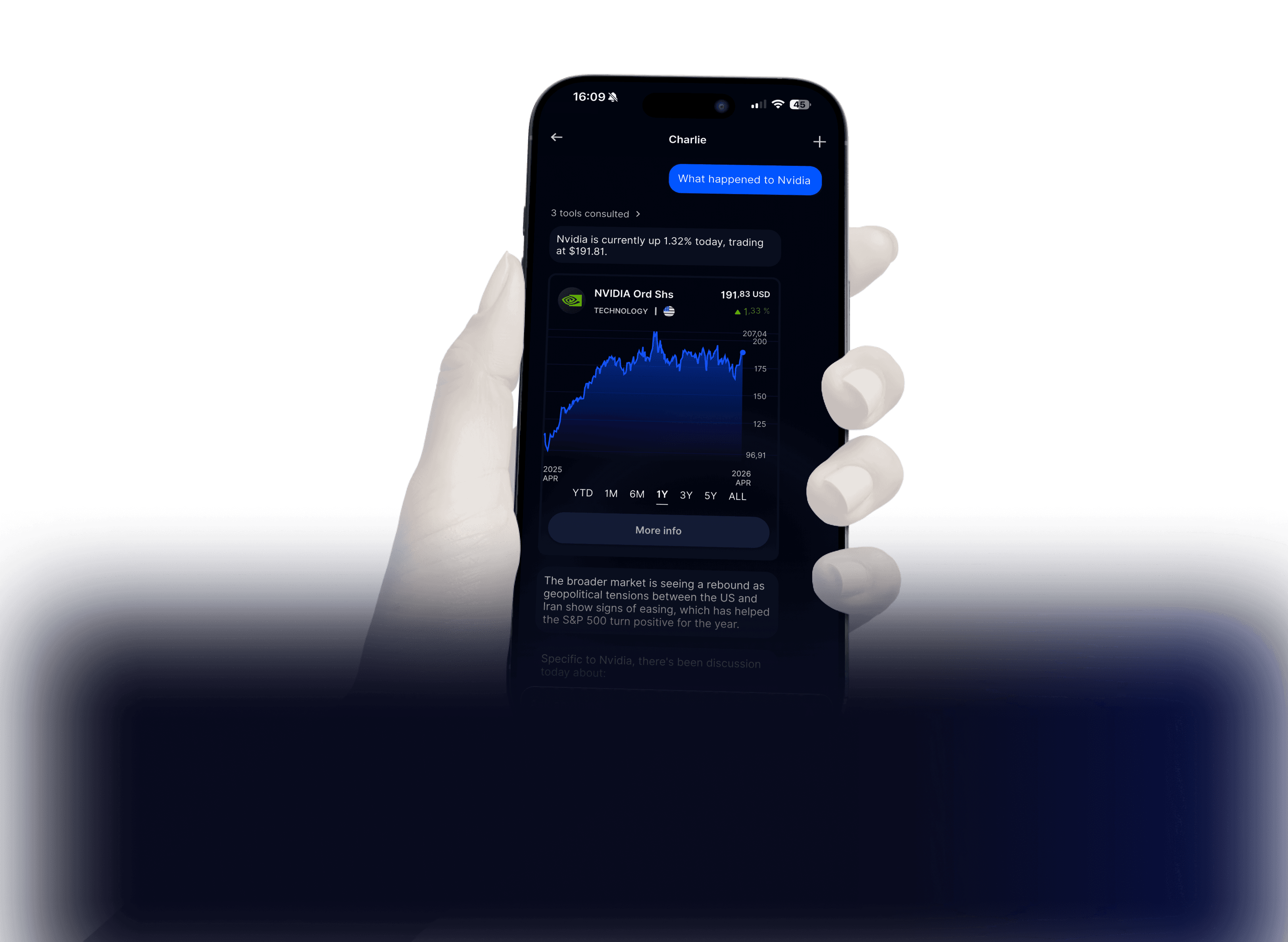
Charlie is built to be configured around the institution. The name, tone, language, topic scope, answer length, supported tools, visual treatment, and deployment model can all be adapted. If Charlie is embedded through the SDK, the experience can be fully white-label and shaped in detail inside the bank's own product. If Charlie is used through API or MCP, the bank can keep more of its own interface while using Charlie as the investing intelligence layer behind it.
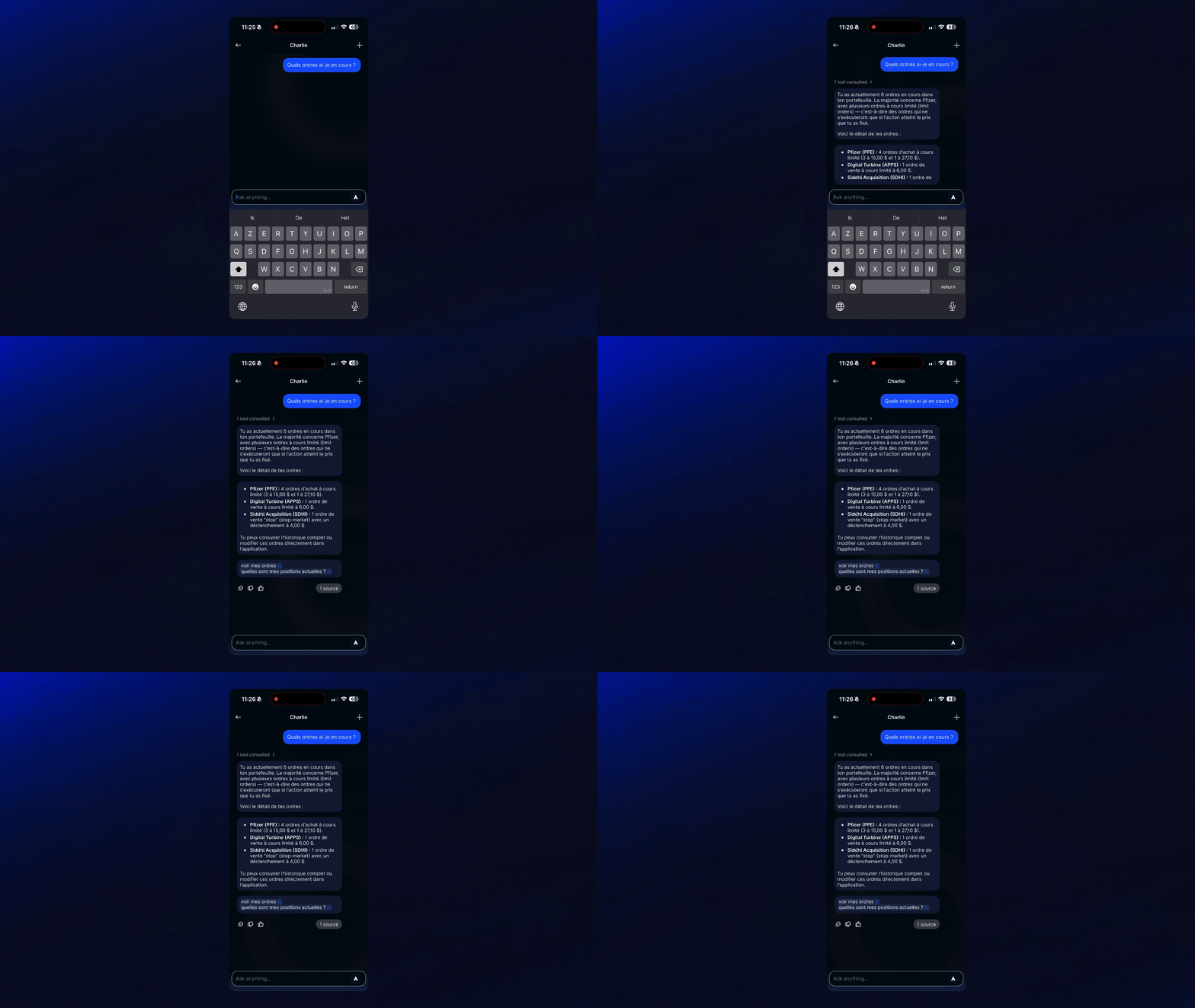
For clarity, we left the UI (tools and resources consulted) in English.
Tone is configuration, not a single prompt
A prompt can say "be professional and friendly". That is not enough for a regulated investing product.
A real brand and tone setup needs to define how the assistant behaves across many moments: a calm portfolio explanation, a market-news question, an empty-portfolio onboarding flow, an order step, a blocked request, a missing-data state, a support handoff, and a long educational answer for someone who asks for more detail.
This is also where brand, UX, and compliance meet. The FCA Consumer Duty puts strong emphasis on clear, timely, accessible information and on tailoring communications to customers' financial literacy. ESMA's guidance on AI in investment services reminds firms that AI does not remove MiFID II obligations, including acting in the client's best interest. So the question is not only "does this sound on brand?" It is also "does this help the customer understand the right thing at the right time?"
What should be editable
The useful standard is simple: if the investor can see it, hear it, read it, click it, misunderstand it, or infer it from the conversation, it should be configurable.
Area | What should be configurable | Example |
|---|---|---|
Assistant identity | Name, avatar, greeting style, first-person or institution-led wording | "Hi Kris" versus "Good morning, Kris" |
Formality | From very formal and institutional to warm and conversational | Private bank tone versus challenger bank tone |
Message length | Short answers, detailed explanations, expandable detail, summary-first answers | "Give me the quick answer" versus "Explain the drivers" |
Reading level | Plain-language defaults, glossary support, jargon policy | "Bond prices fell" before explaining yield mechanics |
Language and locale | Supported languages, local spelling, date formats, currency formats |
|
Product terminology | Bank-specific names for accounts, portfolios, plans, mandates, risk profiles | "Investment plan" versus "portfolio strategy" |
And the editable surface should not stop at text.
Area | What should be configurable | Why it matters |
|---|---|---|
SDK interface | Colours, typography, spacing, cards, widgets, input states, buttons, loading states | The assistant should feel native in the bank's own app |
Conversation structure | Bullets, tables, citations, follow-up suggestions, source display, detail toggles | Different banks have different clarity standards |
Topic scope | What Charlie can discuss, what it should decline, what should route to support | Brand voice should not widen the advice boundary |
Compliance wording | Disclosures, risk language, advice deflection, source phrasing, handoff language | Controls should be explicit and reviewable |
Journey behaviour | Welcome, onboarding, portfolio review, order flow, market volatility, empty portfolio | The right tone changes with the moment |
Operating model | Who approves tone changes, when settings are reviewed, how changes are logged | Brand settings become production controls |
Formality is not one slider
Formality is often treated as one setting. In practice, it is a group of decisions.
A financial institution might want Charlie to sound very precise when explaining risk, warmer when helping a beginner understand an empty portfolio, and short and factual when an order flow is in progress. Another institution might prefer a more coaching style throughout the journey, but still require strict language around suitability, execution, and portfolio losses.
Here is the same idea in a few different styles.
Setting | Example response style |
|---|---|
Short and formal | "Your portfolio is down 1.8% today, mainly due to equity exposure. I can show the main contributors." |
Friendly and concise | "Your portfolio is lower today, mostly because several equity positions moved down. Want to see the biggest drivers?" |
Detailed and educational | "Your portfolio is down 1.8% today. The main driver is equity exposure, especially holdings in the technology sleeve. This does not necessarily change your long-term plan, but it is useful to look at the contributors before drawing conclusions." |
Compliance-forward | "I can explain the portfolio movement and the main contributors. I cannot tell you whether to buy or sell unless that is part of an approved advice or mandate flow." |
That level of detail matters because different answers carry different risk. A welcome message can be light. A portfolio-loss explanation should be calm and factual. An order step should be exact. A blocked advice request should be kind, firm, and useful.
White-label should mean the full surface is yours
With Charlie, you can go two ways:
Use the full SDK if you want deep control over the full experience,
or use our widget library if you prefer to build more through APIs.
In both cases, the UI is highly editable in detail, so it can match the bank’s design system far beyond a simple logo swap.
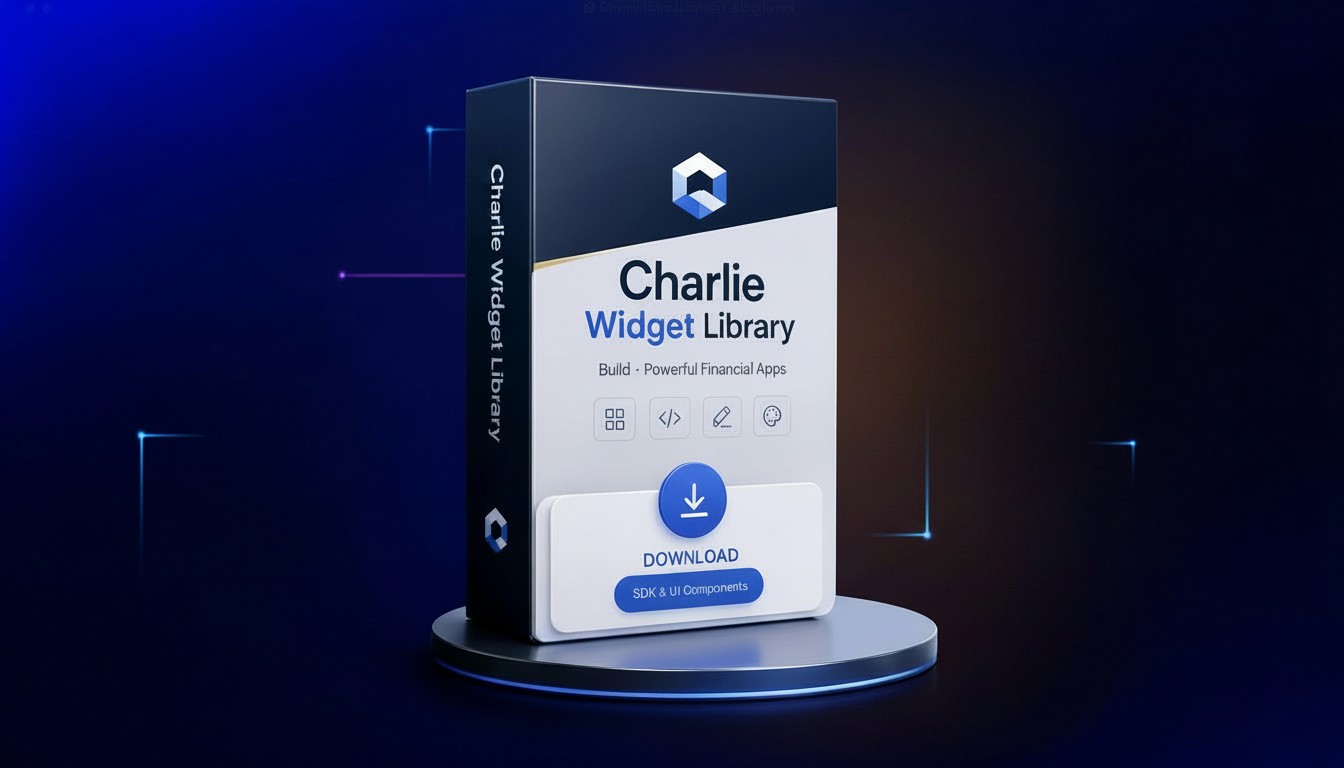
Our library includes ready-made widgets for Flutter, HTML/CSS and React, with Swift and native Android coming soon. We keep that library continuously updated, so teams can move faster without losing control over the look and feel.
Tone should change by moment
A strong tone system does not force every answer into the same shape. It gives each situation the right default.
Situation | Better tone bias | Why |
|---|---|---|
First welcome | Warm, short, clear | The user should understand what they can ask |
Empty portfolio | Helpful and educational | The user may need confidence before taking the first step |
Market volatility | Calm, evidence-based, not dramatic | Emotionally loaded language can push users toward bad decisions |
Portfolio loss | Empathetic but factual | The answer should acknowledge concern without sounding alarmist |
Order flow | Precise and low-ambiguity | The user must understand the action, instrument, amount, and next step |
Out-of-scope request | Polite, firm, useful redirect | A refusal should still help the user continue productively |
Missing data | Transparent and specific | The assistant should say what is unavailable and what can still be answered |
Human handoff | Clear and reassuring | The user should know why a human is being involved |
This is where many generic assistants feel wrong inside a bank. They can be fluent, but they do not naturally know when to become shorter, more formal, more careful, or more explicit. Charlie's per-bank configuration layer is there to make those decisions part of the product setup.
FAQ
Can Charlie match your brand and tone of voice?
Is the SDK fully white-label?
Can messages be shorter or longer?
What should be editable beyond tone?
How does tone connect to compliance?
Can configuration change after launch?

Meet Charlie. The Investing AI Agent.
Give your clients an entire investing experience, rebuilt from the ground up as a conversational AI agent.