
Last week, one of the most anticipated IPOs in a generation ended with a paradox. SpaceX, which now publicly traded on Nasdaq and valued at roughly $2 trillion, drew over $100 billion in retail orders, breaking records at every major brokerage that offered access. Charles Schwab called client interest "unprecedented." SoFi Technologies said SpaceX was the largest and most subscribed offering in its history. And yet, individual investors posting on Reddit's WallStreetBets forum reported receiving a single share after requesting hundreds. The mismatch between demand and allocation told a story that goes well beyond any single stock: the self-directed retail investor has become a dominant force in capital markets, and the platforms designed to serve them are still catching up.
For wealth managers, RIAs, and banks that have historically focused on high-net-worth clients and advisor-driven models, the SpaceX moment is a strategic signal. This article examines what it reveals about the changing retail investor landscape, what it means for institutions that serve this segment, and how forward-thinking firms are building the infrastructure to compete.
Self-Directed Investing: From Niche to Normal
The scale of retail demand in the SpaceX IPO was not accidental. It reflects a structural shift in how millions of investors now engage with financial markets. In the United States, the share of investors with self-directed accounts rose from 19% in 2018 to 33% in 2025, according to market research on the self-directed investor segment. The share of assets held in self-directed brokerage accounts climbed from 14% to 24% over the same period. Globally, the self-directed investors market is valued at approximately $108.8 billion in 2026 and is projected to reach $161.5 billion by 2035, growing at a CAGR of 4.49%.
Self-directed investing: An approach in which individuals manage their own investment portfolios independently by selecting assets, executing trades, and making allocation decisions, without relying on a financial advisor to direct their choices, typically through a digital brokerage or investment platform.
The generational dynamics are even more striking. Approximately 62% of millennials and Gen Z investors engage in self-directed investing models, with 57% relying on real-time analytics tools for decision-making. Thirty percent of Gen Z began investing in university or early adulthood, compared with just 6% of Baby Boomers at the same life stage. These investors did not arrive at self-direction out of necessity, but rather because digital platforms made it possible, and because they trust their own judgment. A 2026 survey found that 59% of retail investors report working with financial advisors, down from 64% just two years earlier.
The SpaceX IPO crystallized this shift because it happened at scale and in real time. Bloomberg reported that retail investors submitted more than $100 billion in orders, and CNBC confirmed that SpaceX ultimately cut the retail allocation to the "low 20%" range, well below the 30% initially anticipated. The result: massive unmet demand from individual investors who were not passive bystanders in the process, but active, informed participants with conviction and capital.
What This Means for Wealth Managers and RIAs
For institutions that serve retail and mass-affluent clients, the SpaceX moment raises three immediate questions. First, can your platform deliver the kind of IPO-access experience that self-directed investors now expect as standard? Second, are you building digital capabilities fast enough to retain clients who are actively choosing to manage more of their own portfolios? And third, are you positioned to serve the segment that is growing fastest, one that is younger, digitally native, and wants both the autonomy of self-direction and the confidence of institutional-grade tools?
The competitive pressure is arriving from multiple directions simultaneously. Commission-free digital brokerages like Robinhood, Fidelity's Trader+, Webull, SoFi are investing heavily in capabilities that blur the line between self-directed investing and professional-grade analysis. Robinhood launched Agentic Trading in May 2026, giving retail investors access to AI agents that can execute strategies autonomously within a dedicated account. Betterment moved in the opposite direction, expanding from robo advisory into self-directed stock and ETF trading, combining algorithmic portfolio management with individual stock selection on a single platform.
The challenge for mid-tier wealth managers and banks, however, it’s predominantly execution. 89% of RIAs agree that delivering a high-quality digital experience is a major competitive advantage, yet most firms are still investing primarily in advisor-facing tools rather than client-facing digital investing infrastructure. The self-directed segment, meanwhile, is not waiting.
"Gen X and Millennial clients now expect their RIA to feel like a modern fintech app with a human fiduciary behind it: intuitive digital self-service, real-time visibility into their portfolios and goals, and proactive insights powered by data and AI."
— Digital Wealth Management Platform research, Backbase 2026
How Forward-Thinking Firms Are Serving the Self-Directed Investor
The firms capturing this segment are not building self-directed investing from scratch. They are deploying purpose-built digital investing layers on top of their existing infrastructure, enabling clients to manage their own portfolios with confidence, while maintaining the institutional guardrails that distinguish a bank-grade platform from a standalone trading app. The capability gap they are closing is not about price or access, but about experience quality. Fractional shares, real-time performance commentary, personalized market alerts, tax-impact previews, and seamless switching between self-directed and advised modes: these are the features that determine whether a self-directed investor stays on your platform or migrates to a dedicated fintech.
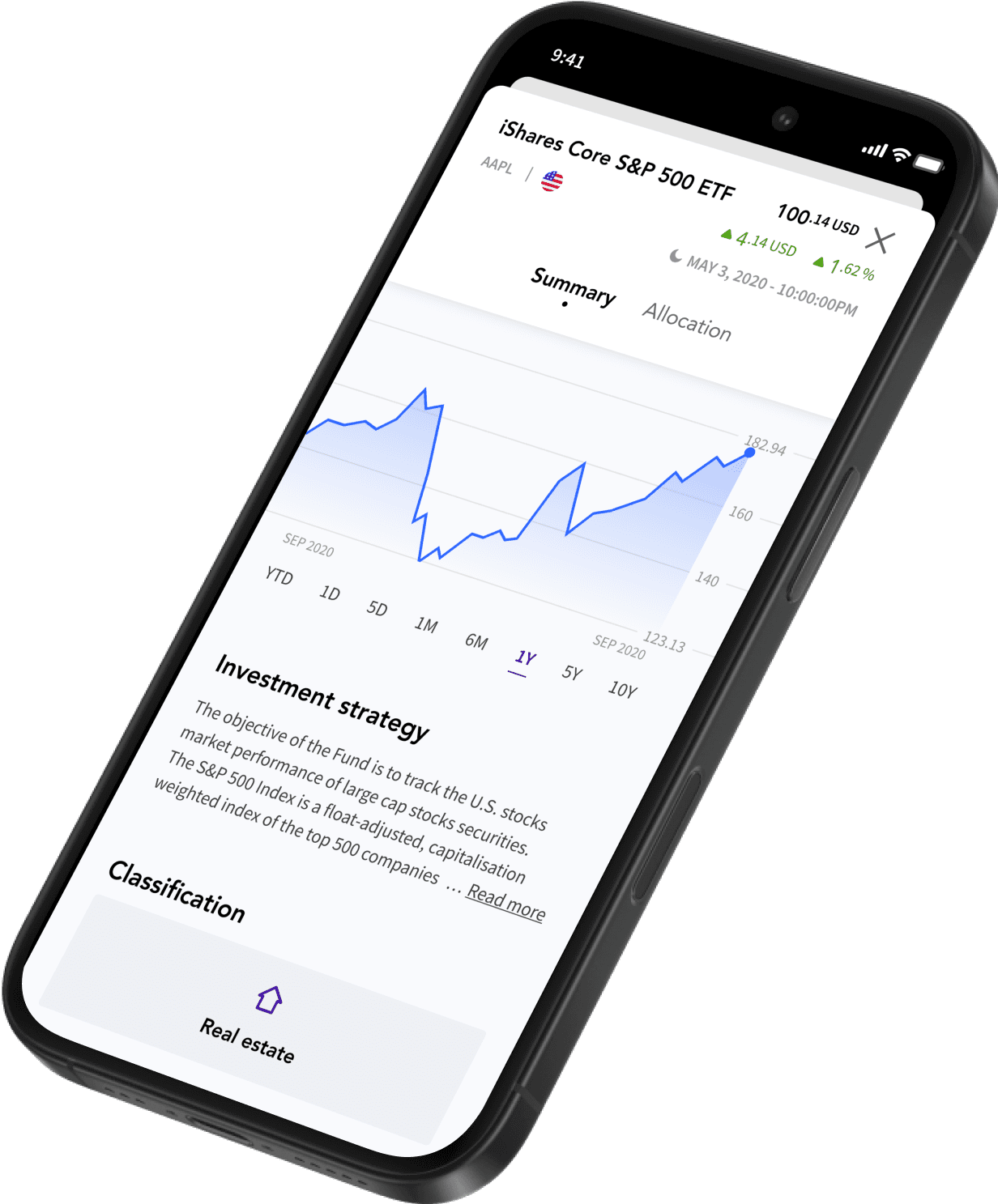
This is precisely the problem InvestSuite's Self Investor is built to address. Self Investor enables banks, wealth managers, and financial institutions to launch a market-grade self-directed investing experience for their retail and mass-affluent clients, without building the underlying investment infrastructure themselves. Rather than ceding the self-directed segment to standalone brokerages, institutions that deploy Self Investor can offer their clients investment, inspiration, real-time portfolio insights, and AI-powered investment discovery, embedded directly into the bank or platform they already trust.
The SpaceX IPO showed something important about what self-directed investors actually want: they want access to the same opportunities that institutional investors have, and they want a platform sophisticated enough to help them make decisions with confidence. That combination of access plus intelligence plus institutional trust is not something a standalone trading app can easily replicate. But it is exactly what an established wealth manager or bank, equipped with the right digital investing infrastructure, can deliver.
The broader data reinforces the urgency. The SEC's push to expand retail investor access to private assets and IPOs is accelerating — with Chairman Paul Atkins explicitly "exploring ways to facilitate the ability of individual investors to participate in the private markets." If that regulatory shift continues, the demand spike seen in the SpaceX IPO will become a recurring feature of how retail investors engage with major capital market events. Platforms that are not ready to serve that demand will watch the opportunity pass to competitors who are.
The Firms That Build for Self-Direction Now Will Own the Next Decade of Retail Wealth
The $100 billion in retail orders that arrived for the SpaceX IPO is not an anomaly. It is a preview. The self-directed investor segment is growing in size, in sophistication, and in the expectations it brings to every financial platform it touches. For wealth managers and banks, the strategic choice boils down to building the infrastructure to serve this segment well, or to lose it by default to platforms that have already made that investment. The firms that move now will define the next decade of retail wealth management.
If you’re ready to take that next step and are looking for a faster way to upgrade your digital offering, reach out to us and we’ll be more than happy to tell you more about our investtech.