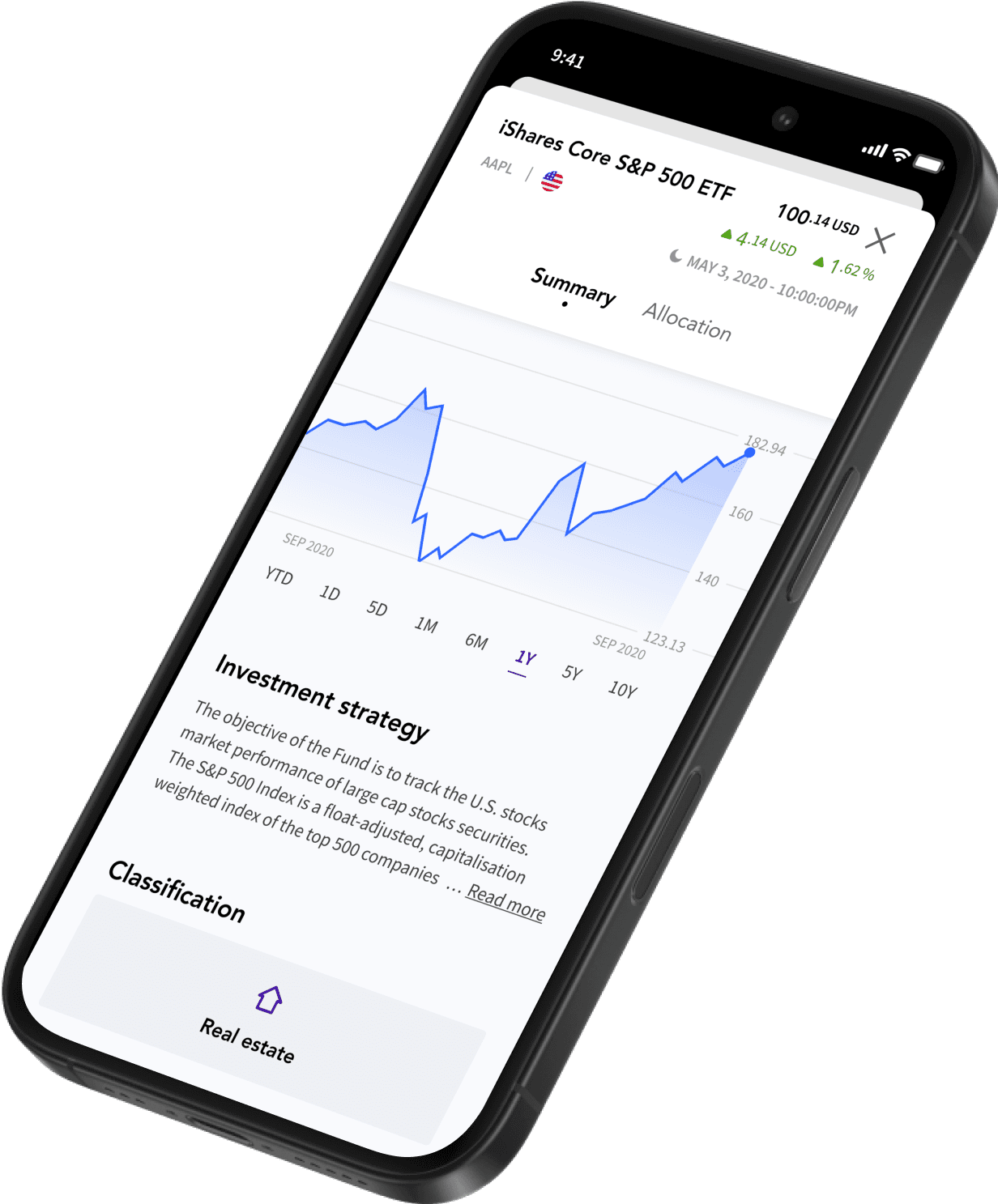

The wealth management industry stands at a technological crossroads. As digital transformation accelerates and client expectations evolve, financial institutions face a critical decision: should they build a custom wealthtech platform from the ground up or leverage a white-label solution? This choice will fundamentally shape their competitive positioning, resource allocation, and ability to scale in an increasingly crowded marketplace.
Understanding the nuances between these two approaches is essential for making an informed strategic decision. Each path offers distinct advantages and challenges that can significantly impact your time to market, total cost of ownership, and long-term flexibility.
In this article we will explore the advantages and disadvantages of building your own solution from scratch as opposed to going for a white-label solution. We will also take a look at go-to-market timelines, costs and expected results when going for one or another approach.
What is a WealthTech Solution?
WealthTech solutions are technology-driven platforms that modernize wealth management, investment advisory, and financial planning services. These systems leverage artificial intelligence, big data analytics, and automation to deliver personalized investment strategies, portfolio management, and financial advice. From robo-advisors to comprehensive portfolio management systems, wealthtech platforms aim to make wealth-building more accessible, efficient, and data-driven.
The White-Label Advantages
white-label solutions represent pre-built, tested platforms that can be customized with your brand identity and deployed rapidly. Rather than developing infrastructure from scratch, you're essentially licensing proven technology and making it your own.
Time to Market: The Game-Changing Difference
Perhaps the most compelling advantage of white-label solutions is their dramatically accelerated deployment timeline. While building a custom platform can consume anywhere from 12 to 24 months or more, white-label solutions can be operational within days or weeks. This speed advantage allows firms to respond quickly to market opportunities and begin generating revenue while competitors are still in development phases.
For wealth management firms, this rapid deployment is particularly valuable. Launching a proprietary platform from scratch can take years and cost millions of dollars, whereas white-label software enables firms to go live in mere weeks at a fraction of the cost.
Cost Efficiency: Predictable Investment
The financial contrast between building and buying is stark. Custom development of a wealthtech platform typically requires investments ranging from $50,000 to several hundred thousand dollars, with complex enterprise systems often exceeding $200,000 to $300,000. More comprehensive wealth management solutions can reach $150,000 to $250,000 or more.
White-label solutions, conversely, operate on subscription or licensing models starting as low as a few hundred dollars per month. While long-term subscription costs accumulate, they remain predictable and often more cost-effective than maintaining an in-house development team. The upfront capital requirements are dramatically lower, making advanced technology accessible to firms of all sizes.
Reduced Risk and Proven Stability
White-label platforms come battle-tested, having been used by multiple clients across various scenarios. This means fewer bugs, more robust security protocols, and stability that comes from real-world deployment. The software has already undergone extensive testing and refinement, significantly reducing the technical and financial risks associated with unproven custom builds.
Built-In Compliance and Security
Financial services operate under stringent regulatory frameworks including MiFID II, GDPR, KYC/AML requirements, and securities laws. White-label providers typically maintain comprehensive regulatory frameworks and necessary licenses, handling audits and reporting requirements. This compliance infrastructure, which would be costly and time-consuming to build independently, comes embedded in the solution.
Security measures including encryption, multi-factor authentication, and SOC 2 compliance are already implemented and continuously updated by vendors. For an industry where the global average cost of a data breach reached $4.9 million in 2024, this built-in security represents substantial value.
Access to Advanced Features Immediately
White-label platforms come equipped with sophisticated capabilities including AI-powered analytics, robo-advisory algorithms, automated portfolio rebalancing, real-time data integration, and comprehensive reporting tools. These features would require significant development time and specialized expertise to build from scratch, but are immediately available with white-label solutions.
The Limitations of White-Label Solutions
Despite their advantages, white-label platforms come with inherent constraints that organizations must carefully consider.
Customization Boundaries
While white-label solutions offer configuration options, they operate within the boundaries of pre-built architecture. Firms seeking highly specialized features or unique workflows may find themselves constrained by the platform's fundamental design. The core functionality receives continuous updates from developers, but you typically (although not always) cannot commission entirely unique features that deviate significantly from the standard offering.
Vendor Lock-In Concerns
Adopting a white-label solution creates dependency on the vendor's technology stack and business continuity. If the vendor increases prices, degrades service quality, or fails to innovate at the pace your business requires, switching becomes complex and expensive. Data portability can be limited, with export capabilities potentially not including all data types, historical information, or metadata necessary for complete migration.
Organizations face escalating switching costs, reduced negotiating power over time, and operational risks from single-vendor reliance. Cloud vendors may charge significant egress fees for data transfer, adding financial barriers to migration.
Limited Competitive Differentiation
When multiple competitors use similar white-label platforms, differentiation becomes challenging. The platform itself may not provide the unique competitive advantage that custom-built solutions can offer, particularly for firms whose value proposition centers on proprietary technology or methodologies.alphathena+3
Ongoing Subscription Costs
While white-label solutions have lower upfront costs, monthly or annual subscription fees accumulate over time. For organizations planning substantial long-term scale, these recurring costs can eventually exceed the amortized expense of custom development. It's estimated that maintenance and subscription costs typically amount to 15-20% of the original development budget annually.
Building From Scratch: Maximum Control, Maximum Investment
Custom development offers complete ownership and unlimited flexibility, but demands substantial resources and commitment.
Total Customization and Proprietary Advantage
Building in-house provides pixel-perfect control over every feature, workflow, and integration. Organizations can create truly proprietary technology that embodies their unique intellectual property and competitive strategy. This customization extends to proprietary algorithms, specialized client workflows, unique data models, and integration with legacy systems that off-the-shelf solutions cannot accommodate.
Full Data Ownership and Control
Custom platforms ensure complete ownership of your technology stack and all associated data. There are no concerns about vendor access to sensitive client information or restrictions on how you use, analyze, or migrate your data. This control becomes particularly important for firms managing high-net-worth clients or operating in highly regulated environments where data sovereignty is critical.
Long-Term Cost Potential
While initial development costs are substantial, custom platforms may prove more economical over extended timeframes for organizations at scale. Once built, there are no vendor licensing fees, though maintenance and enhancement costs continue indefinitely. For firms with significant technical resources and long-term horizons, the total cost of ownership can favor custom development.
The Substantial Challenges of Custom Development
Building from scratch transforms your organization into a technology company, with all the attendant responsibilities and risks.
Extended Development Timelines
Custom wealthtech platforms typically require 12 to 24+ months for initial development, assuming everything proceeds smoothly. This timeline includes requirements gathering, architecture design, development, testing, security audits, compliance certification, and user acceptance testing. In a rapidly evolving market, this extended development period represents lost opportunities and delayed revenue generation.
Substantial Capital Requirements
Comprehensive custom wealthtech development generally requires investments of $200,000 to $500,000 or more, with particularly sophisticated systems potentially exceeding $1 million. These costs encompass developer salaries, infrastructure, compliance expertise, security implementation, testing, and project management.
For robo-advisor platforms specifically, development costs typically range from $35,000 to $300,000, depending on complexity, feature set, and the sophistication of investment algorithms.
Team Building and Talent Acquisition
Custom development requires assembling a specialized team including frontend and backend developers, solution architects, DevOps engineers, UI/UX designers, QA engineers, data scientists, security specialists, and compliance experts. Recruiting and retaining this talent in a competitive market is challenging and expensive.
Hiring fintech developers requires finding professionals who blend deep technical knowledge with understanding of financial regulations, security protocols, and domain-specific challenges. This specialized expertise commands premium compensation.
Ongoing Maintenance Burden
Development doesn't end at launch. Custom platforms require continuous maintenance consuming 15-25% of the original development budget annually. This includes bug fixes, security patches, feature enhancements, compliance updates, performance optimization, and infrastructure maintenance.
Technology evolves rapidly, and custom platforms risk becoming obsolete without dedicated resources for continuous innovation. Your organization inherits the responsibility of a technology company, competing with VC-backed fintechs and established platforms for both talent and innovation velocity.
Regulatory and Compliance Complexity
Building compliant wealthtech infrastructure requires deep expertise in securities laws, data privacy regulations (GDPR, CCPA), anti-money laundering requirements, know-your-customer protocols, and jurisdiction-specific financial regulations. The regulatory landscape constantly evolves, demanding ongoing legal expertise and system adaptations.
For organizations without existing compliance infrastructure, navigating this complexity represents a significant barrier. The SEC has increased scrutiny of wealthtech companies, particularly regarding algorithmic transparency and fiduciary responsibilities.
Technical Architecture Considerations
Technology Stack Requirements
Modern wealthtech platforms typically employ sophisticated technology stacks:
Frontend: React.js, Angular, or Vue.js for responsive, interactive user interfaces
Backend: Python (Django), Node.js, Java (Spring Boot), or Go for robust server-side logic
Databases: PostgreSQL for relational data, MongoDB for flexible document storage
Cloud Infrastructure: AWS, Google Cloud Platform, or Microsoft Azure for scalability
Security: End-to-end encryption, multi-factor authentication, OAuth 2.0
APIs: RESTful or GraphQL APIs for integration with financial data providers, custodians, and third-party services
Building and maintaining this infrastructure requires specialized expertise across multiple domains.
Scalability and Performance
Custom platforms must be architected for growth from inception, requiring elastic resource allocation, load balancing, database optimization, caching strategies, and microservices architecture. These technical considerations significantly increase development complexity.
White-label platforms provide proven scalability, having already handled various load scenarios across multiple clients. They leverage cloud infrastructure designed to accommodate growth without requiring substantial re-architecture.
The Hybrid Approach: Best of Both Worlds
Some organizations are discovering that the optimal strategy combines elements of both approaches.
Starting with White-Label, Evolving to Custom
A common pattern involves launching quickly with a white-label solution to establish market presence and generate revenue, then gradually building custom capabilities as the business scales and specific needs emerge. This approach provides immediate time-to-market advantages while preserving the option for future differentiation.
White-Label with Custom Extensions
Modern white-label platforms increasingly offer API-first, modular architectures that allow organizations to integrate custom-built components alongside standard features. This enables differentiation in specific areas while leveraging proven infrastructure for core functionality.
Selective Custom Development
Rather than building an entire platform, organizations might develop proprietary components (such as unique investment algorithms or client engagement tools) while using white-label solutions for commoditized features like account management, reporting, and compliance.
Making the Decision: Key Evaluation Criteria
Time Sensitivity
If rapid market entry is critical, white-label solutions offer an insurmountable advantage. Organizations needing to respond quickly to competitive threats or market opportunities should prioritize speed.
Budget and Resources
Firms with limited capital should generally favor white-label solutions, which spread costs over time through predictable subscription models. Organizations with substantial budgets and existing technical teams may consider custom development for long-term strategic reasons.
Differentiation Requirements
Businesses whose competitive advantage depends on proprietary technology or highly specialized workflows may require custom development despite its higher cost and longer timeline. Conversely, firms competing primarily on service quality, relationships, or investment performance can leverage white-label platforms effectively.
Technical Expertise
Organizations lacking in-house technical leadership should strongly consider white-label solutions. Building custom platforms without experienced leaders, solution architects, and senior developers dramatically increases failure risk.
Regulatory Complexity
Firms operating across multiple jurisdictions or serving institutional clients with complex compliance requirements should carefully evaluate whether white-label providers offer adequate regulatory coverage.
Scalability Projections
Organizations anticipating substantial growth should model long-term costs for both approaches. While white-label solutions scale operationally, subscription costs increase with usage. Custom platforms have higher fixed costs but lower marginal costs at scale.
Real-World Implementation Timelines
Research indicates that approximately 25% of technology implementations fail entirely, with another 25% falling short of expectations. Success requires appropriate methodology, clear requirements, and realistic timeline expectations.
White-label Implementation: 2-6 weeks for basic deployment, 2-3 months for comprehensive customization and integration.
Custom Development: 12-18 months for mid-complexity platforms, 18-24+ months for enterprise-grade systems with advanced features.
These timelines assume skilled teams, clear requirements, and absence of major complications. Real-world projects frequently encounter delays, scope changes, and technical challenges that extend timelines.
The Verdict: Strategic Alignment Over Universal Solutions
There is no universally correct answer. The optimal choice depends entirely on your organization's specific circumstances, strategic priorities, and resource realities.
White-Label solutions excel when:
Speed to market is critical
Budget constraints limit upfront capital investment
In-house technical expertise is limited
Core technology is not a primary competitive differentiator
Regulatory compliance infrastructure is needed immediately
Risk mitigation is prioritized over customization
Custom development makes sense when:
Proprietary technology creates competitive advantage
Highly specialized workflows cannot be accommodated by existing solutions
Long-term cost optimization justifies substantial upfront investment
Strong technical leadership and resources are available
Complete data ownership and control are non-negotiable
The organization is prepared to operate as a technology company
Hybrid approaches work when:
Organizations want to balance speed with future flexibility
Specific capabilities require differentiation while others can be commoditized
Phased implementation allows validation before major custom investment
API-first architectures enable integration of custom and white-label components
Looking Forward
The wealthtech landscape continues evolving rapidly, with platforms becoming increasingly modular, API- and AI-driven, and sophisticated. The boundaries between white-label and custom development are blurring as modern solutions offer greater customization within proven frameworks.
Regardless of which path your company chooses, success requires clear strategic vision, realistic resource assessment, and commitment to continuous evolution. The technology decision is not merely technical—it fundamentally shapes your competitive positioning, client experience, and ability to adapt in a rapidly changing wealth management environment.
The firms that will thrive are those that align their technology strategy with their unique value proposition, resource realities, and long-term vision rather than following generic industry trends. Whether that means embracing the efficiency of white-label solutions, committing to the differentiation of custom development, or navigating a strategic hybrid path, the key is making an informed, deliberate choice that serves your organization's specific needs and aspirations.
Reach out to our team of experts if you are interested in speeding up your digital transformation with our suite of white-label solutions.