Most self-directed investing experiences still greet users with menus, balances, and watchlists.
The question that follows is usually simple. Why is my portfolio down? What changed? Do I need to act?
Those are not edge-case questions. They appear during every market move, and they land on digital teams, support desks, and service operations. The issue is rarely lack of data. It is lack of context at the moment the investor needs it.
That is why the front door is changing. The first job of the experience is no longer navigation. It is interpretation.

The old front door was built for navigation
For years, the front door to investing was a dashboard. Open the app. Check the balance. Tap into positions. Search for news. Piece the story together.
That model worked when digital investing was mainly about access and execution. It works less well when users expect software to answer questions in plain language and connect the answer to their actual holdings.
In investing, that matters most when markets are moving and anxiety is high. A stronger front door does more than greet the user. It explains what changed, why it matters, and what the next sensible step looks like.
What the new front door has to do
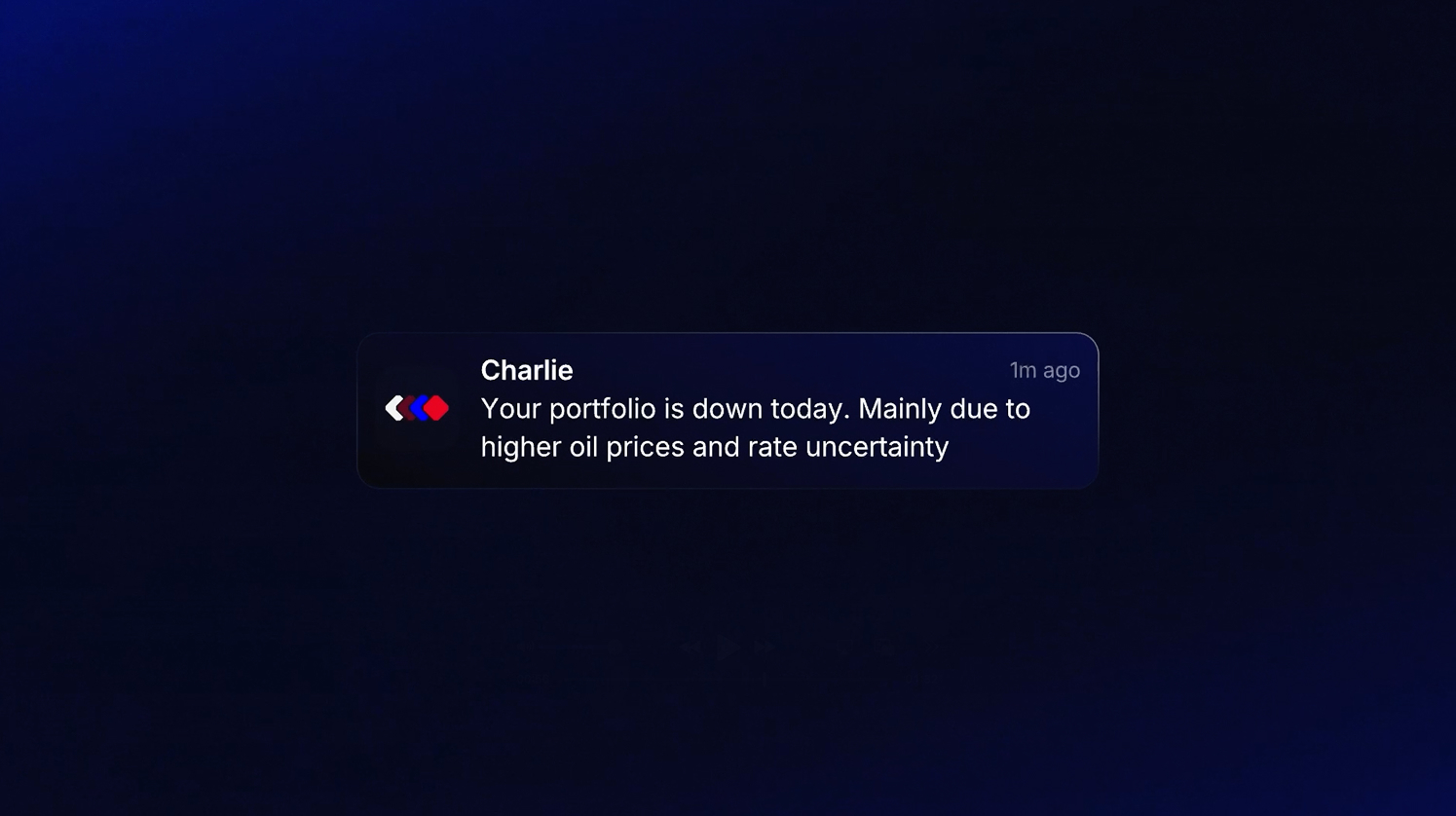
If a portfolio is down 3%, the useful response is not another chart. It is context tied to the portfolio, the market move behind it, and the user's options.
That requires three things working together. Portfolio context with real holdings and deterministic calculations. Market context linked to the instruments that actually moved. Workflow context that takes the user from question to understanding, and from understanding to the next permitted action.
That is where a generic assistant usually stops being enough. Investing journeys ask for something more specific than broad conversational fluency.
How Charlie fits this shift
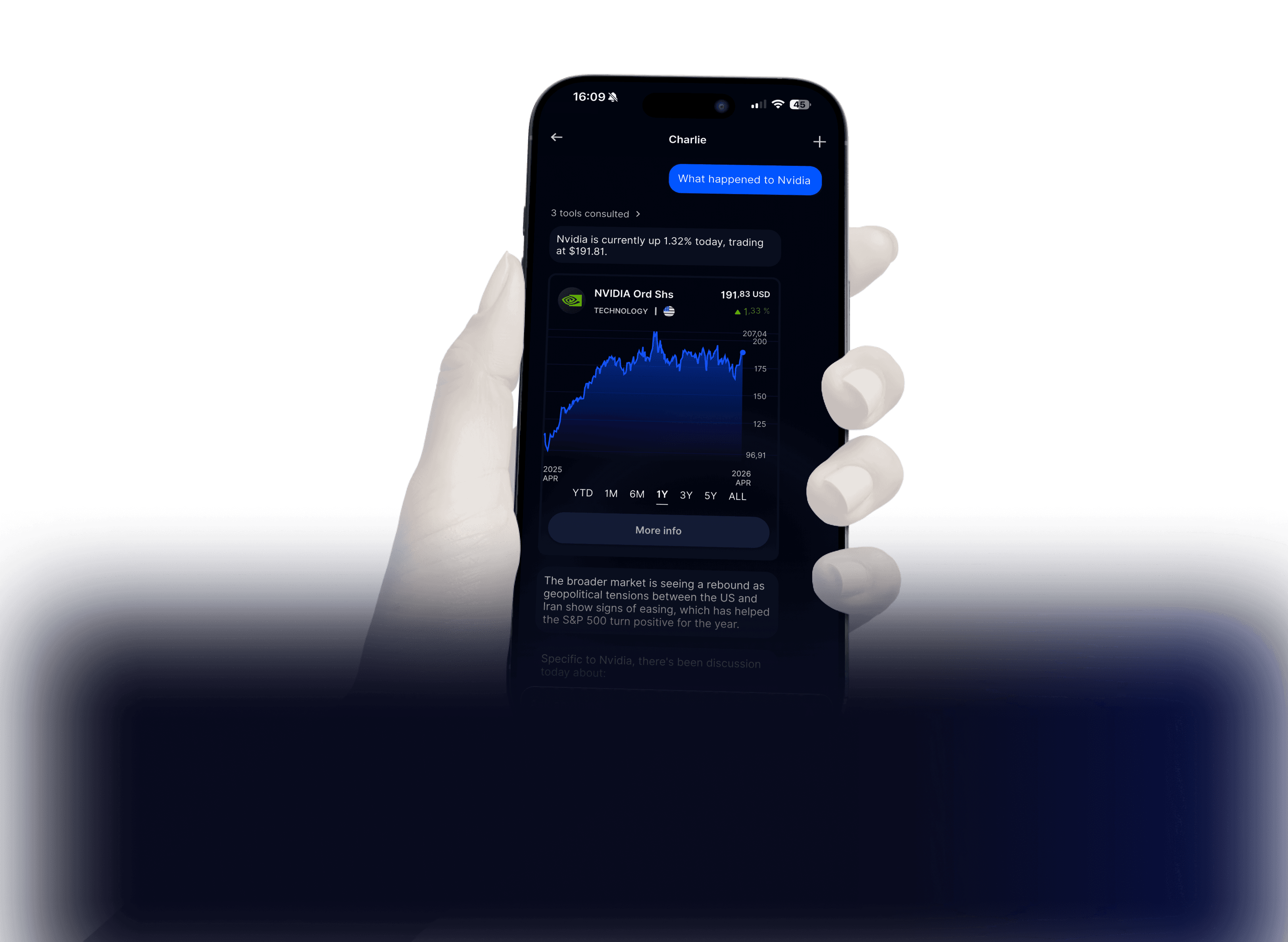
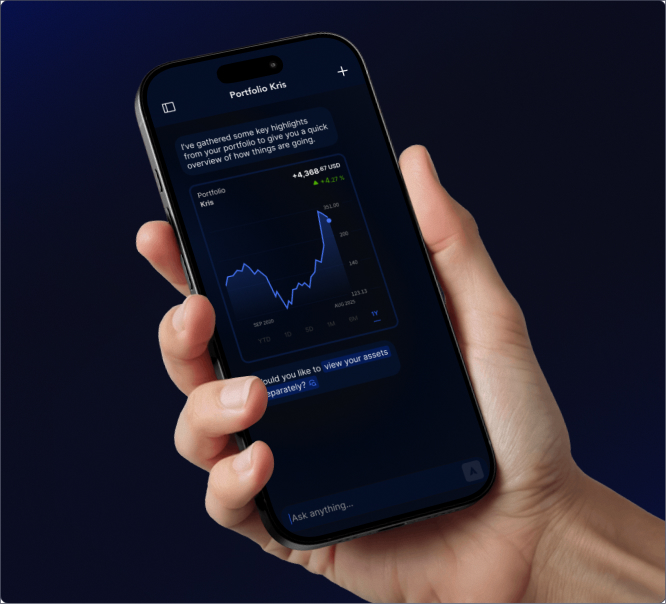
Charlie by InvestSuite is built for this front-door moment. It is a B2B investing AI agent for banks, brokers, and wealth managers.
In self-directed journeys
Charlie explains portfolio context, answers investment questions, supports order flow, and automates recurring touchpoints without crossing into financial advice.
Under the hood
The credibility comes from the operating model underneath the interface: deterministic portfolio calculations, model-agnostic orchestration, compliance-shaped design, and deployment options that fit bank reality.
Why banks are approaching this as a layer
Few banks want another multi-year rebuild. Most want a safer way to add intelligence to experiences they already run.
That is where Charlie's deployment model is useful. It can sit inside existing journeys, be bundled with InvestSuite products, or run as a standalone AI layer on top of the current stack.
The benefits show up in three places. Service efficiency, because investors get answers in the moment and repetitive support demand can fall during volatile periods. Engagement quality, because the experience starts with interpretation instead of raw information. Delivery flexibility, because teams can embed via SDK, API, or MCP and choose a deployment model that matches their governance and data posture.
Why this matters now
Investor expectations have shifted. Many people already use AI to make sense of financial questions before they act.
That does not mean every journey should become open-ended chat. It does mean the experience should feel capable of answering real questions in real time.
For banks, the opportunity is not to mimic consumer AI products. It is to offer a more trustworthy, portfolio-aware alternative inside a controlled environment. For self-directed investing in particular, that means explaining and educating clearly while keeping advice boundaries intact.
The front door is changing
AI is becoming the front door for investing because the first interaction is becoming conversational, contextual, and action-oriented.
The institutions that handle that moment well will feel more helpful, more modern, and more trustworthy. The ones that do not may still offer the same products, but the experience will feel harder than it needs to.
Charlie shows one practical way forward: an investing AI layer built for regulated environments, deterministic on portfolio math, model-agnostic, and designed to work with the stack a bank already has.
That is the shift. Not from apps to hype. From static interfaces to guided investing journeys.